
Pangoniinae
Long-tongue Horse Flies
Tribe Guides
2- Goniopsini
- Pangoniini(horse flies)
Pangoniinae is a of horse-flies ( Tabanidae, order Diptera) comprising seven tribes and over 40 . Members are distinguished from other Tabanidae by the presence of ocelli and an antennal typically bearing eight rings. The subfamily includes some of the most primitive known Tabanidae, with most being low-flying and non-bloodfeeding. Australian Pangoniinae show east coastal distribution with a secondary center in Western Australia.
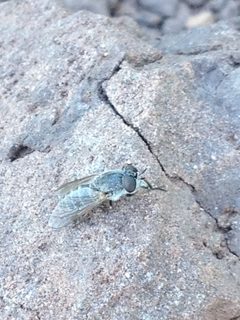
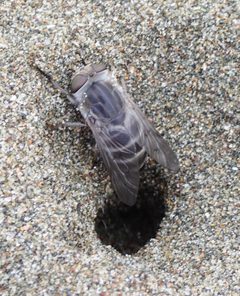
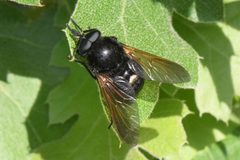
Pronunciation
How to pronounce Pangoniinae: //pænˈɡoʊ.ni.aɪni//
These audio files are automatically generated. While they are not always 100% accurate, they are a good starting point.
Identification
Distinguished from other Tabanidae by: (1) presence of ocelli (simple ), and (2) antennal usually with eight rings. Australian Pangoniini exhibit progressive reduction in female , divisions of the third antennal segment, and hind tibial spurs.
Images
Distribution
Widespread across multiple biogeographic regions: Palaearctic (including Lebanon), Nearctic, Neotropical, Ethiopian, Oriental, and Australasian (Australia, New Guinea, New Zealand). In Australia, principal distribution is east coastal from Torres Strait to southern New South Wales, with a secondary center in Western Australia; absent from Tasmania.
Diet
Most in Australian Pangoniini do not suck blood; bloodfeeding habits of other tribes not documented in available sources.
Behavior
Most Australian Pangoniini are low-flying insects.
Similar Taxa
- Other Tabanidae subfamiliesLack ocelli and have different antennal structure (typically not eight-ringed)
More Details
Tribal classification
Seven tribes recognized: Braunsiomyiini, Goniopsini, Mycteromyiini, Pangoniini, Philolichini, Scionini, and Scepsidini. Tribes Goniopsini and Mycteromyiini were established by Lessard (2014) through revision of Scionini.
Primitive characteristics
Australian Pangoniini include the most primitive known Tabanidae, representing early-diverging lineages within the .
Sources and further reading
- BugGuide
- Wikipedia
- iNaturalist taxon
- NCBI Taxonomy
- Catalogue of Life
- The Tabanidae (Diptera) of Australia. 2. Subfamily Pangoniinae, tribe pangoniini.
- The classification and distribution of tananidae (Diptera) 2. History: Morphology: Classification: Subfamily Pangoniinae.
- An annotated checklist of the horse flies (Diptera: Tabanidae) of Lebanon with remarks on ecology and zoogeography: Pangoniinae and Chrysopsinae