
Chrysops vittatus
Wiedemann, 1821
deer fly
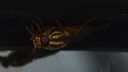
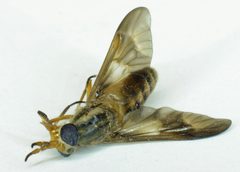
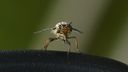
Chrysops vittatus is a of deer fly in the Tabanidae, first described by Wiedemann in 1821. Like other members of the Chrysops, it is a biting fly known for its blood-feeding . The species has been documented in laboratory studies alongside C. atlanticus and C. univittatus. Specific field data on this species remains limited in the available sources.
Pronunciation
How to pronounce Chrysops vittatus: //ˈkraɪs.ɒps vɪˈteɪ.təs//
These audio files are automatically generated. While they are not always 100% accurate, they are a good starting point.
Images
Distribution
United States and Canada. Distribution records include Vermont, USA.
Diet
Blood-feeding has been observed in ; specific dietary details for C. vittatus not documented in available sources.
Human Relevance
Deer flies in the Chrysops are known biting pests; specific human impact of C. vittatus not separately documented.
Similar Taxa
- Chrysops atlanticus studied alongside C. vittatus in laboratory research; both share similar life history parameters and preferences.
- Chrysops univittatus studied alongside C. vittatus in laboratory research; similar and ecological requirements.
More Details
Taxonomic Note
Catalogue of Life lists this name as a synonym, while GBIF and NCBI recognize it as an accepted . The authorship is consistently given as Wiedemann, 1821 across sources.
Research Gap
A 1992 laboratory study examined parameters of C. vittatus, but only the abstract was available for this record. Full text access would be required to extract specific biological data.
Sources and further reading
- BugGuide
- Wikipedia
- GBIF taxonomy match
- NCBI Taxonomy
- Catalogue of Life
- Grasshoppers of Colorado
- Forgotten Foto Friday: Centruroides vittatus | Beetles In The Bush
- Rare frog rediscovered after 130 years | Blog
- A face only a mother could love | Beetles In The Bush
- Bug Eric: What the Insects Have Taught Me
- Observation on the Laboratory Life History of Chrysops atlanticus, C. univittatus and C. vittatus (Diptera: Tabanidae)