
Chrysops divisus
Walker, 1848
deer fly
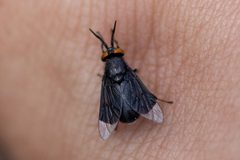
Chrysops divisus is a of deer fly in the Tabanidae. It was described by Walker in 1848. Like other members of the Chrysops, it is a blood-feeding fly that is known to bite humans and other mammals. The species has been recorded in the United States, though specific details about its and remain limited in the available literature.
Pronunciation
How to pronounce Chrysops divisus: //ˈkrɪsɒps daɪˈviːsəs//
These audio files are automatically generated. While they are not always 100% accurate, they are a good starting point.
Identification
Chrysops divisus can be distinguished from other Chrysops by the specific patterning and coloration typical of the , though precise diagnostic features for this particular species are not well-documented in accessible sources. Members of Chrysops generally have large, brightly colored that meet dorsally in males and are separated in females, patterned wings, and a relatively robust body form. Accurate identification to species level typically requires examination of genitalic structures and comparison with .
Images
Distribution
United States.
Diet
females are blood-feeders, obtaining blood meals from mammals including humans. Adult males feed on nectar and other sugary substances.
Life Cycle
Like other tabanid flies, Chrysops divisus undergoes complete with , larval, pupal, and stages. Larvae are typically aquatic or semi-aquatic, developing in moist soil or shallow water environments. Specific details of the for this are not documented in available sources.
Behavior
females are and seek blood meals to support development. They are persistent biters and can be significant nuisances to humans and livestock in areas where they are abundant.
Ecological Role
As blood-feeders, females may serve as for various , though specific associations for C. divisus are not documented. The larvae contribute to nutrient cycling in aquatic and semi-aquatic .
Human Relevance
Chrysops divisus is a nuisance pest due to its biting . Deer flies in general are known for their painful bites and can interfere with outdoor activities. They may also such as and loiasis, though specific transmission records for C. divisus are not available.
Similar Taxa
- Chrysops excitansSimilar size, distribution, and general appearance; both occur in North America and require careful examination for separation
- Chrysops atlanticusOverlapping range in eastern United States; similar wing patterns and body coloration
More Details
Taxonomic status
According to Catalogue of Life, Chrysops divisus is listed as a synonym, though GBIF treats it as an accepted . This taxonomic uncertainty reflects ongoing revisions within the Chrysops.
Data limitations
Very few detailed biological studies have been published specifically on C. divisus. Most information is inferred from the level or from studies of related .