Rhagio scolopaceus
(De Geer, 1776)
downlooker snipefly
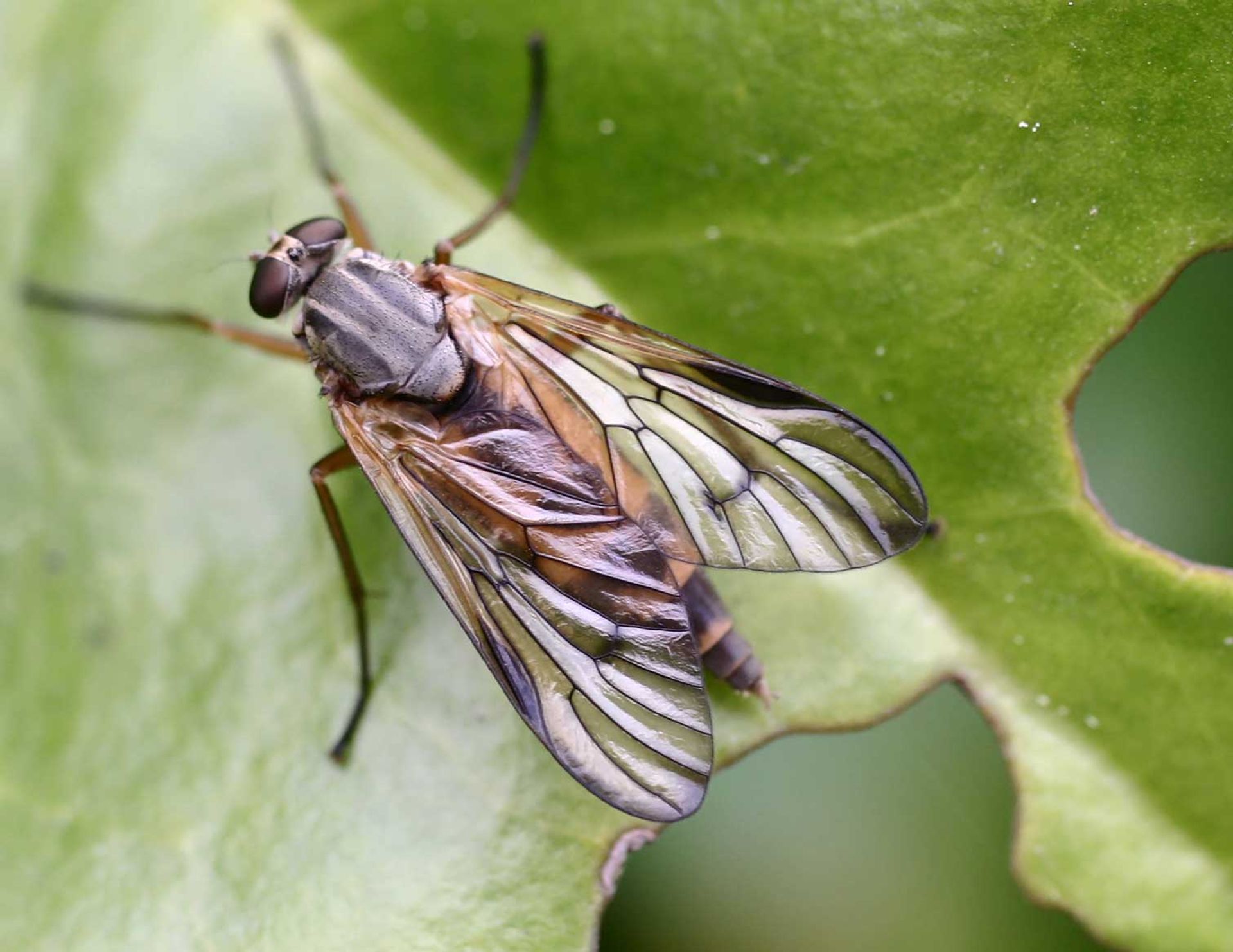
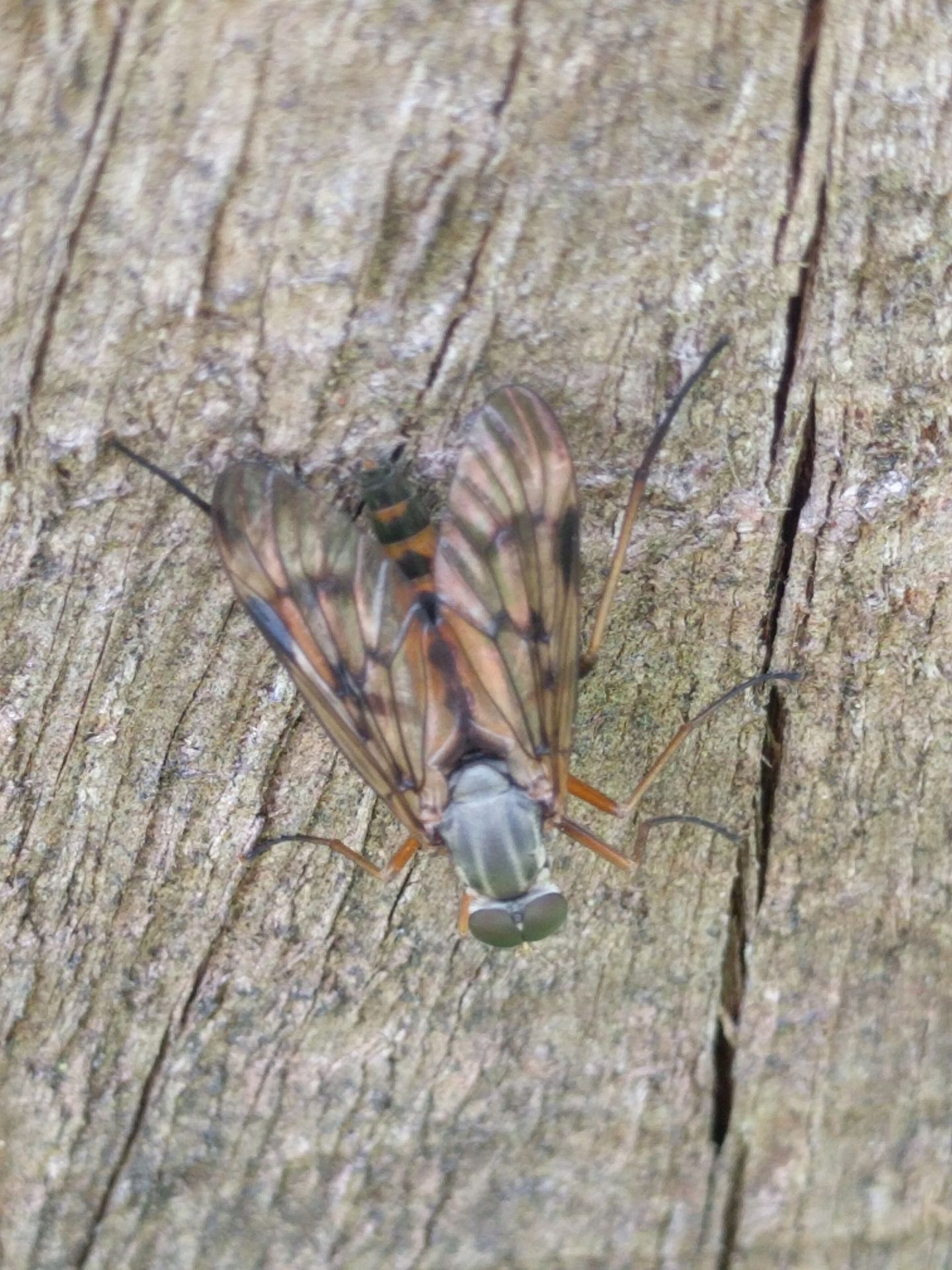
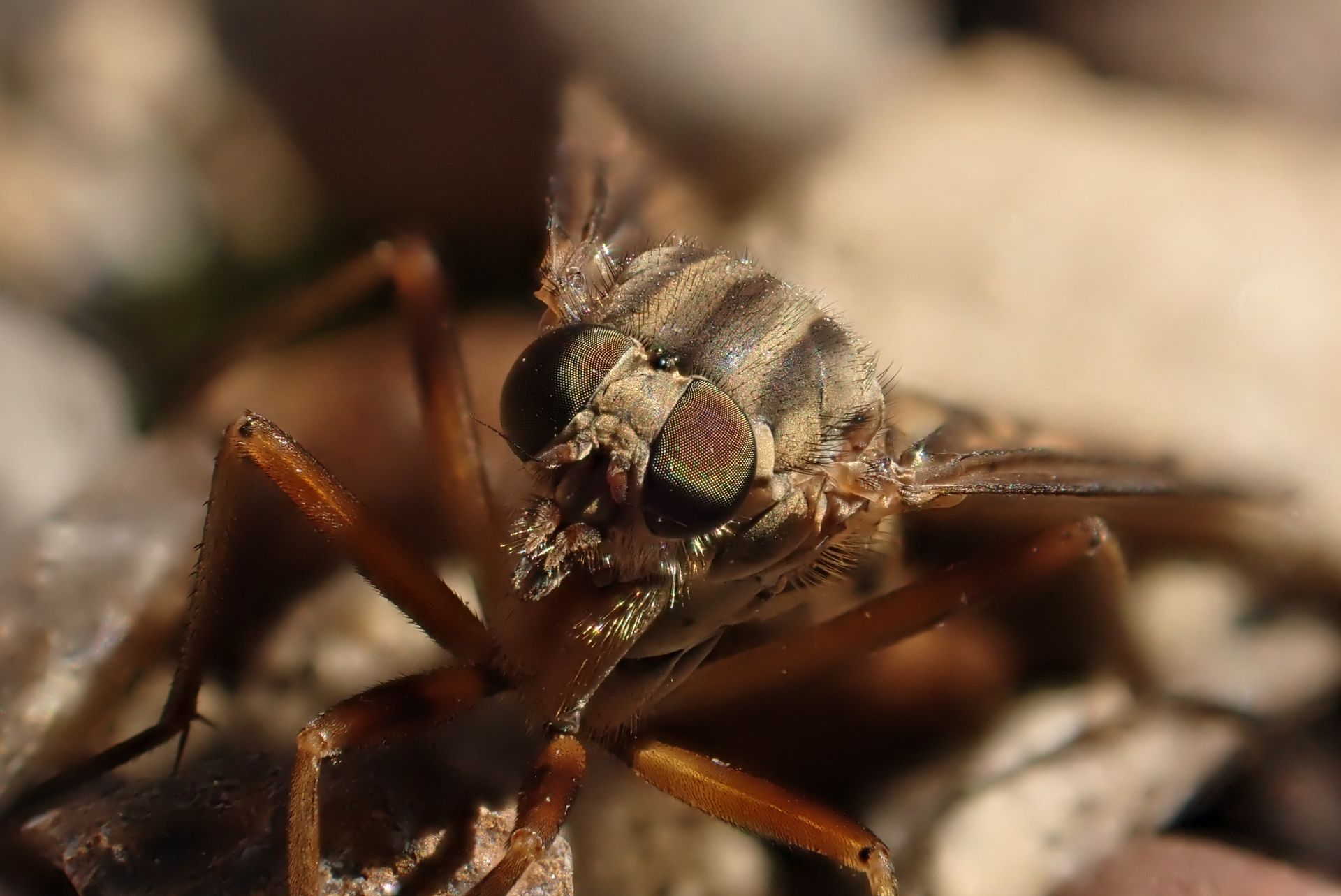
Rhagio scolopaceus, commonly known as the downlooker snipefly, is a widespread in the Rhagionidae and the type species of its . It is recognized by dark spots or bands on the wings and an elongated third antennal segment. The species exhibits in arrangement: females have broadly separated (dichoptic) , while males have nearly conjoined () eyes. It is considered the most common species in its family.
Pronunciation
How to pronounce Rhagio scolopaceus: //ˈræd͡ʒi.oʊ ˌskɒləˈpeɪ.si.əs//
These audio files are automatically generated. While they are not always 100% accurate, they are a good starting point.
Identification
Distinguished from other Rhagionidae by the combination of wing spots or bands and elongated third antennal segment. in arrangement provides additional diagnostic characters: females with separated eyes, males with contiguous eyes. Separated from similar snipe flies by wing pattern details and antennal proportions.
Images
Habitat
Woodland edges, forest understories, and moist wooded areas. often perch on vegetation in shaded or semi-shaded environments.
Distribution
Widespread across the Palearctic region, including Europe and parts of Asia. Records from the British Isles through continental Europe.
Seasonality
active primarily in late spring through summer, with peak activity typically in June and July depending on latitude.
Life Cycle
Larval stage is soil-dwelling or found in decaying organic matter; larvae are predatory. Larval structure and cranial have been described anatomically. emerge in spring to summer. Specific details of and stages not well documented in available sources.
Behavior
frequently perch on leaves and branches in a characteristic -down posture, which contributes to the 'downlooker snipefly'.
Ecological Role
Larvae function as in soil and decaying organic matter . may serve as prey for .
Human Relevance
No significant economic or medical importance. Occasionally encountered by naturalists and entomologists in woodland . Used as a subject in anatomical studies of dipteran larval .
Similar Taxa
- Chrysopilus ornatusAnother ornate snipe fly in Rhagionidae, but distinguished by metallic golden scaling and more robust body form; lacks the characteristic wing banding pattern of R. scolopaceus
- Other Rhagio species may share general but differ in wing pattern details, antennal proportions, and genitalia; R. scolopaceus specifically identified by combination of spotted/banded wings and elongated third antennal segment
More Details
Type species status
Rhagio scolopaceus is the type of the Rhagio, making it the reference point for taxonomic definition of the genus.
Anatomical study subject
The larval and cranial of R. scolopaceus have been subject of detailed anatomical study, providing comparative data for understanding brachyceran fly visual system evolution.
Sources and further reading
- BugGuide
- Wikipedia
- iNaturalist taxon
- NCBI Taxonomy
- Catalogue of Life
- Bug Eric: January 2014
- Bee Fly Parasitism of Tetracha virginica | Beetles In The Bush
- May | 2023 | Beetles In The Bush
- Missouri | Beetles In The Bush | Page 2
- The eye and its relation to the cranial nervous system in the larva of the brachyceron Rhagio scolopaceus (L.) (Diptera: Rhagionidae)