Rhagio mystaceus
(Macquart, 1840)
Common Snipe Fly, Down-looker Fly, Downlooker Snipefly
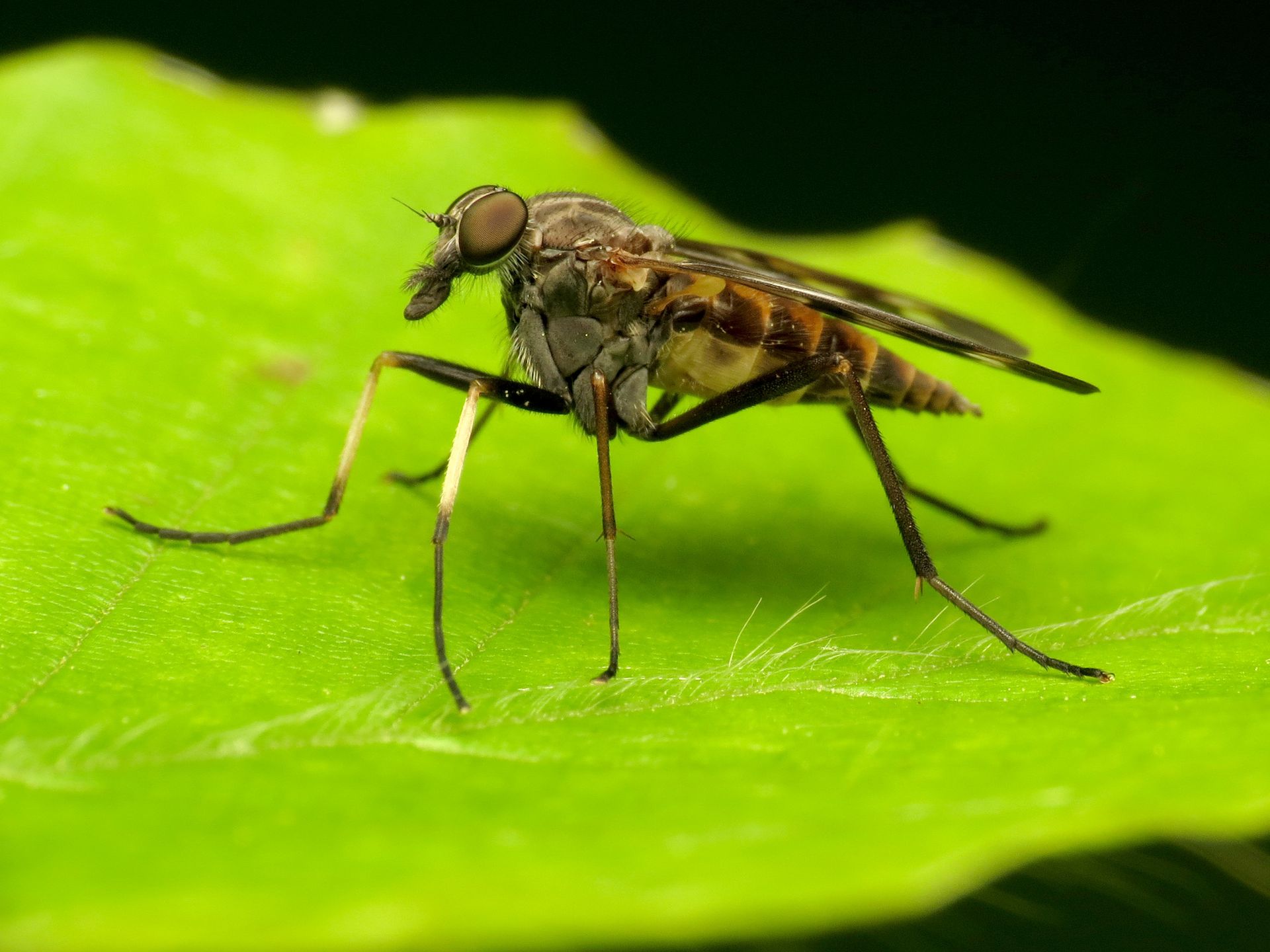
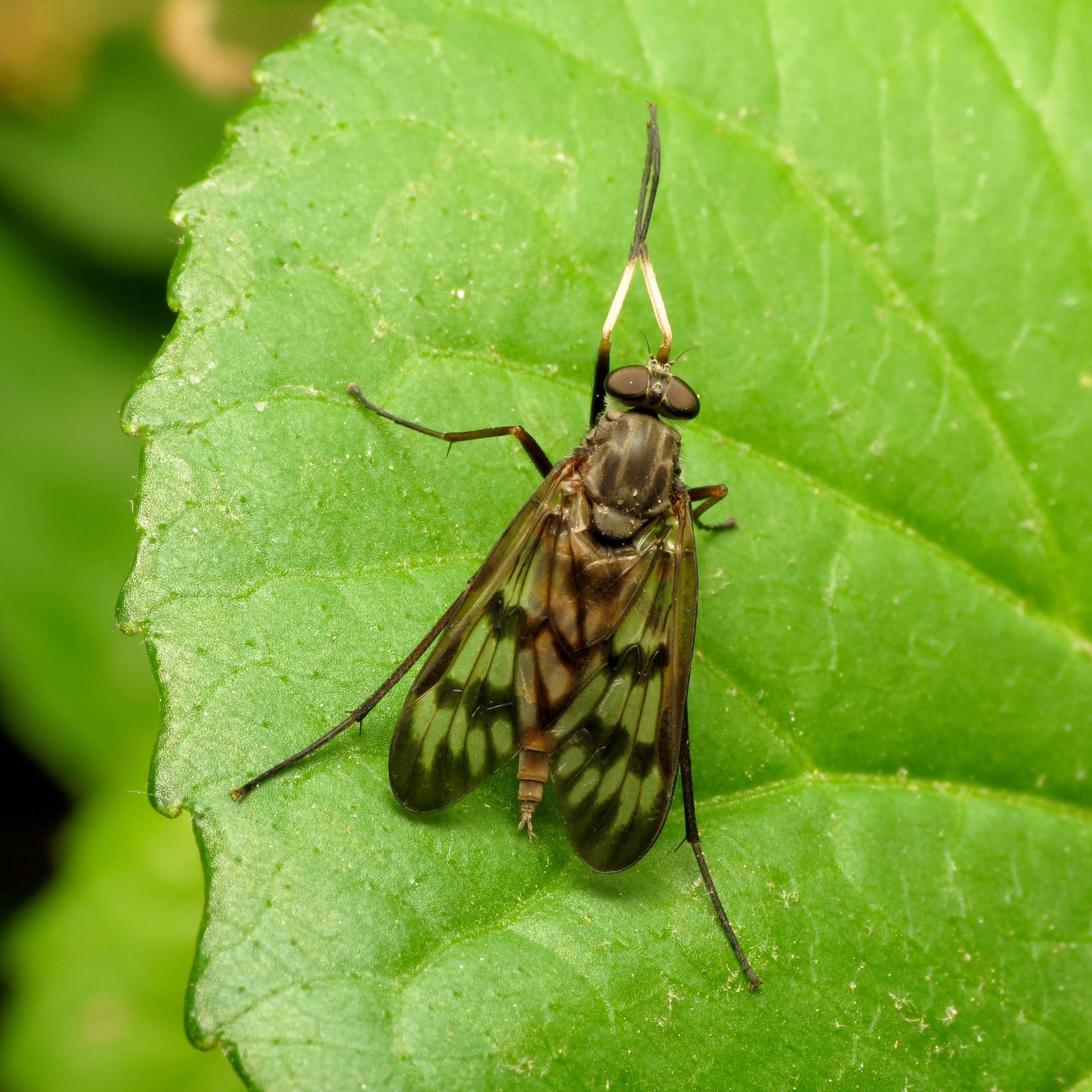
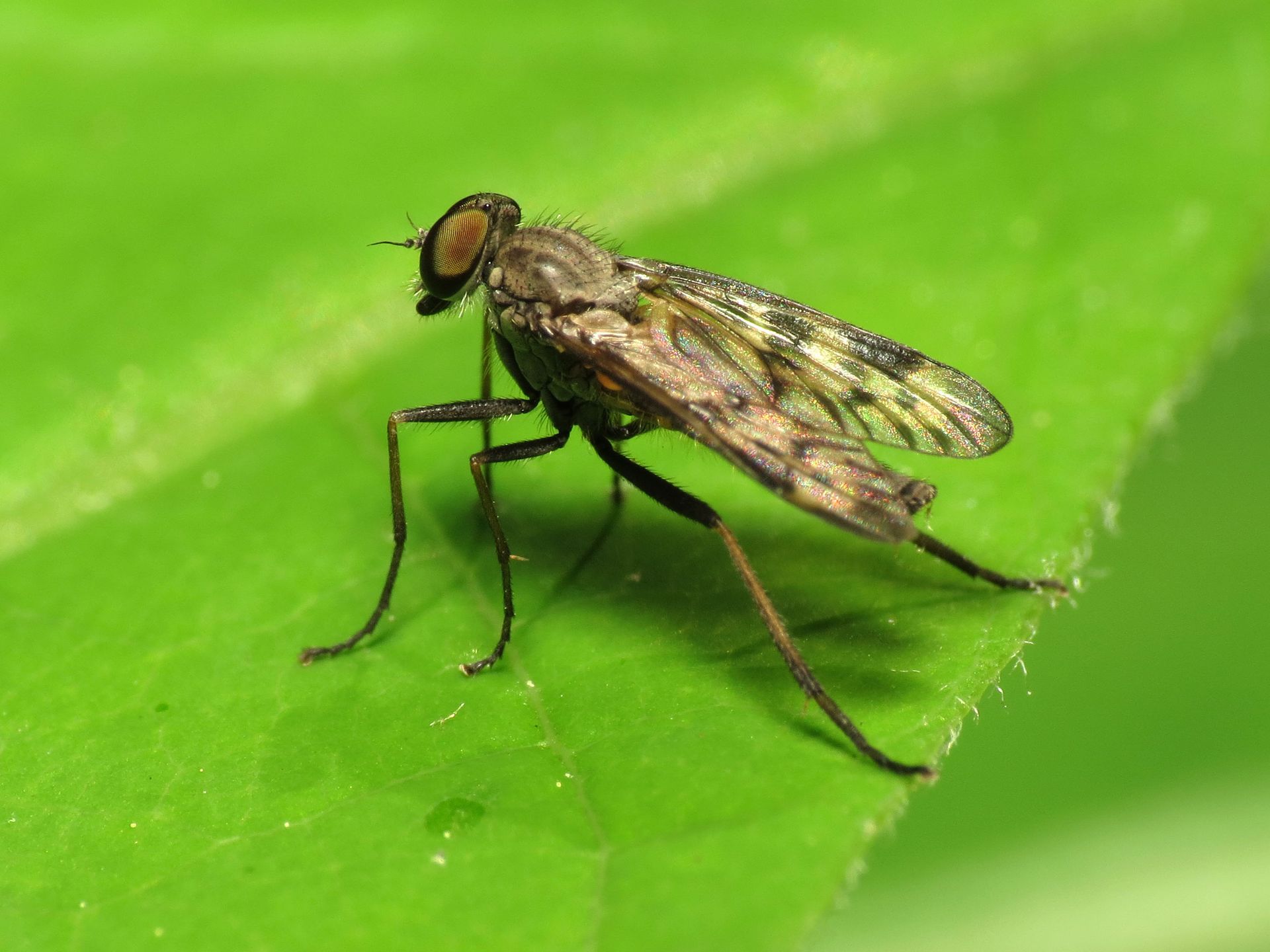
Rhagio mystaceus is a small to medium-sized snipe fly in the Rhagionidae, commonly known as the Common Snipe Fly or Down-looker Fly. Males measure 7–9 mm and females 6–8 mm. The exhibits distinctive patterning including three dark stripes on the , with the central stripe often bearing a thin pale line, and yellowish rings on the abdominal segments. The wings have dark tips. It is found in moist woodland across middle and eastern North America.
Pronunciation
How to pronounce Rhagio mystaceus: //ˈræɡ.i.oʊ mɪsˈteɪ.si.əs//
These audio files are automatically generated. While they are not always 100% accurate, they are a good starting point.
Identification
Distinguished from other Rhagio and snipe flies by the combination of: three dark thoracic stripes with the stripe bearing a thin pale line; yellowish rings on abdominal segments (sometimes with mostly yellowish basal segment); and dark-tipped wings. The 'down-looker' refers to a characteristic perching posture where the fly rests on tree trunks with oriented downward, though this is shared with some . Males are separable from females by contiguous and more slender .
Images
Habitat
Moist woodlands and forest edges, particularly in deciduous and mixed forests. are often found perching on tree trunks, especially in the understory of open hardwood . Larval habitat is poorly documented but likely in damp soil or decaying organic matter based on related .
Distribution
Middle and eastern North America, occurring east of the Great Plains. Documented from Vermont southward through the eastern United States, with records extending west to the prairie-forest transition zone.
Seasonality
are active primarily in late spring through summer, with peak activity in June. Records suggest occurrence from May through July, with some extension into early autumn depending on latitude.
Behavior
frequently perch on tree trunks in a -down orientation, giving rise to the 'down-looker fly.' This perching is characteristic and aids in detection. Adults are and appear to be primarily sit-and-wait or visitors to flowers, though specific feeding behavior is not well documented. is relatively slow and maneuverable among understory vegetation.
Ecological Role
likely function as of small soft-bodied insects or as ; exact trophic role is poorly studied. Larvae of related Rhagionidae are predatory or scavenging in soil and decaying organic matter, suggesting similar ecological function for this .
Human Relevance
No significant economic or medical importance. Occasionally encountered by naturalists and entomologists in woodland settings. The distinctive appearance and perching make it a subject of interest for insect photographers and observers.
Similar Taxa
- Chrysopilus ornatusAnother Rhagionidae with metallic scaling and patterned appearance, but distinguished by bright gold-green coloration, larger size (8–10 mm), and different distribution (northeastern U.S. and adjacent Canada)
- Other Rhagio species may share general body plan and ; R. mystaceus is distinguished by the specific thoracic stripe pattern with pale line and yellowish abdominal rings
More Details
Taxonomic history
Originally described as Leptis mystacea by Macquart in 1840, later transferred to Rhagio. The genus Rhagio is the type genus of Rhagionidae.
Observation frequency
Well-represented in citizen science databases with over 5,900 observations on iNaturalist, indicating it is frequently encountered and readily identifiable by observers.