
Toxomerus mutuus
(Say, 1829)
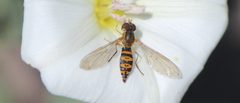
Toxomerus mutuus is a small hover fly ( Syrphidae) in the tribe Syrphini, first described by Thomas Say in 1829. are active that visit flowers for nectar and pollen. The Toxomerus is highly diverse in the Neotropics with over 144 , though this species occurs in North America. Larval for most Toxomerus species remains poorly documented, with some species known to be pollen feeders and others predatory.
Pronunciation
How to pronounce Toxomerus mutuus: /tɔksəˈmɛrəs mjuˈtuəs/
These audio files are automatically generated. While they are not always 100% accurate, they are a good starting point.
Identification
Toxomerus are among the smallest syrphid flies, often measuring just a few millimeters in length. They are frequently mistaken for sweat bees (Halictidae) due to their compact size and sometimes metallic coloration. can be distinguished from bees by their single pair of wings (Diptera), short , and hovering . Within the , species identification requires examination of subtle morphological characters including abdominal patterning and male genitalia; T. mutuus specifically lacks the diagnostic features of related genera like Allograpta.
Images
Distribution
North America. The has been documented across the United States based on museum specimen records and citizen science observations, including in Illinois where it was among the hover fly species identified from century-old specimens at the Illinois Natural History Survey.
Seasonality
have been observed active in early spring (February records from California) through fall, with peak activity likely corresponding to flowering periods and cycles.
Diet
Behavior
exhibit characteristic hovering typical of Syrphidae, and are rapid, skittish fliers that are difficult to photograph in motion. They are flower visitors.
Ecological Role
contribute to pollination of flowering plants. The Toxomerus is recognized for services across life stages, though the specific larval role for T. mutuus remains undocumented.
Human Relevance
are harmless to humans and may occasionally land on skin to lap sweat for salts and minerals, a shared with other small syrphid flies that leads to their misidentification as sweat bees. They are beneficial garden insects when present.
Similar Taxa
- Toxomerus geminatusSimilar small size and appearance; both occur in North American syrphid and require careful examination of abdominal patterning and genitalia for separation.
- Allograpta speciesSimilar size and general appearance; distinguished by subtle thoracic and abdominal characters, with Allograpta having different wing venation and abdominal patterning.
- Halictidae (sweat bees)Frequently mistaken due to convergent small size and metallic coloration; distinguished by wing number (one pair in flies, two in bees), length, and mouthpart structure.
Sources and further reading
- BugGuide
- GBIF taxonomy match
- iNaturalist taxon
- NCBI Taxonomy
- Catalogue of Life
- Syrphids Back Again | Bug Squad
- Bug Eric: Don't Sweat 'em
- Hover Flies Identified: Researchers Tackle 20,000 Syrphid Specimens in Illinois Collection
- The "Accidental Entomologist" Who Studies Insect Community Ecology
- Bug Eric: The Maggot on the Rosebush: Aphid-eating Flower Fly Larvae
- Hover fly on mallow flower | Beetles In The Bush