
Pelecinobaccha costata
(Say, 1829)
Cobalt Hover Fly
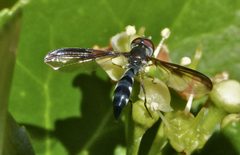
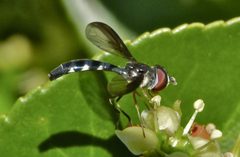
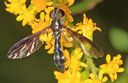
Pelecinobaccha costata, commonly known as the cobalt hover fly, is a North American hoverfly in the Syrphidae. The is recognized by its distinctive coloration and is distributed across southern Ontario and the eastern United States. Its larvae are specialized of scale insects, making it a beneficial species in agricultural and natural .
Pronunciation
How to pronounce Pelecinobaccha costata: /pɛˌlɛsɪˌnoʊˈbækə kəˈsteɪtə/
These audio files are automatically generated. While they are not always 100% accurate, they are a good starting point.
Identification
The specific epithet "costata" refers to ribbed or costate structures, likely indicating distinctive wing venation or body sculpturing. The "cobalt hover fly" suggests metallic blue coloration. Definitive identification requires examination of wing venation patterns and abdominal markings characteristic of the Pelecinobaccha. The may be distinguished from other Ocyptamus-group hoverflies by subtle morphological differences in the male genitalia and wing microtrichia pattern.
Images
Distribution
Southern Ontario, Canada and the eastern United States of America.
Diet
Larvae are of scale insects (Hemiptera: Coccoidea). feeding habits are not documented in available sources.
Host Associations
- scale insects - Larval prey; specific insect or not identified in sources
Ecological Role
of scale insects, potentially providing services in where scale insects occur.
Human Relevance
Potential value as a agent due to larval on scale insects, which are significant agricultural and horticultural pests. No documented negative impacts.
Similar Taxa
- Ocyptamus speciesFormerly classified under Ocyptamus; Pelecinobaccha costata was moved to Pelecinobaccha based on phylogenetic and morphological studies, but remains superficially similar to Ocyptamus hoverflies in general appearance and .
More Details
Taxonomic History
The was originally described by Say in 1829. GBIF currently lists Pelecinobaccha costata as a synonym of Ocyptamus costatus, reflecting ongoing taxonomic debate or alternative classification schemes. The Pelecinobaccha was established to accommodate species previously placed in Ocyptamus that share distinctive morphological features.
Observation Frequency
The has been documented in 845 observations on iNaturalist, indicating it is moderately well-observed but not exceptionally common.