
Meligramma triangulifera
(Zetterstedt, 1843)
Variable Roundtail
Meligramma triangulifera is a hoverfly first described from Europe in 1843. Taxonomic revisions have synonymized several Nearctic species names (M. tenuis, M. cincta) under this species, expanding its recognized range. Identification keys exist for both and puparial stages. The species has been recorded across Europe and the Nearctic region.
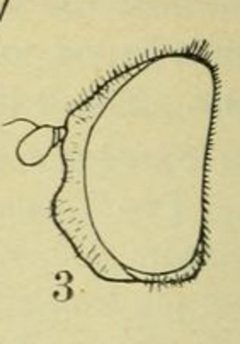
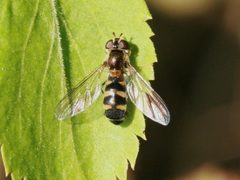
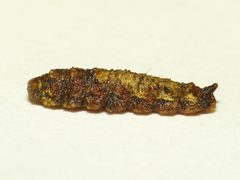
Pronunciation
How to pronounce Meligramma triangulifera: /ˌmɛlɪˈɡræmə traɪˌæŋɡjʊˈfɪərə/
These audio files are automatically generated. While they are not always 100% accurate, they are a good starting point.
Identification
and can be distinguished using the keys provided in taxonomic revisions of the . The has been historically confused with M. guttata and other related , necessitating careful examination of specimens.
Images
Distribution
Europe (first described region, with records from Belgium and Denmark); Nearctic region including British Columbia. GBIF records confirm presence in Belgium, Brussels-Capital Region, Flemish Region, Walloon Region, and Denmark.
Similar Taxa
- Melangyna guttataHistorically confused with M. triangulifera; a lectotype was designated for M. guttata to clarify this distinction
- Melangyna tenuisSynonymized with M. triangulifera in Nearctic revisions; previously treated as distinct
- Melangyna cincta (American authors, not Fallén)Synonymized with M. triangulifera; misapplication of the name cincta led to taxonomic confusion
More Details
Taxonomic History
The has undergone significant taxonomic revision in the Nearctic region. The 1980 review by Maier established that M. tenuis and M. cincta (as used by American authors) represent the same species as the European M. triangulifera. A lectotype designation for M. guttata was also made to stabilize in the .
iNaturalist Observations
The has 419 observations on iNaturalist, suggesting it is regularly encountered and photographed by naturalists, though specific identification features from these observations are not detailed in available sources.