
Chrysotoxum derivatum
Walker, 1849
Narrow-banded Meadow Fly
Chrysotoxum derivatum is a North American hoverfly ( Syrphidae) first described by Francis Walker in 1849. The is commonly known as the Narrow-banded Meadow Fly. It is a relatively large hoverfly, measuring 8.9–16.2 mm in length. The species occurs across a broad geographic range from southern Alaska through Canada and the United States to Mexico.
Pronunciation
How to pronounce Chrysotoxum derivatum: //ˌkrɪsoʊˈtɒksəm ˌdɪˌraɪˈveɪtəm//
These audio files are automatically generated. While they are not always 100% accurate, they are a good starting point.
Identification
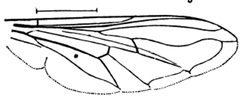
Distinguished from other Chrysotoxum by the narrowness of its abdominal bands, which gives rise to its . The large size range (up to 16.2 mm) may help separate it from smaller . Precise identification requires examination of wing venation and male genitalia.
Images
Appearance
measure 8.9–16.2 mm in length. As a member of the Chrysotoxum, the likely exhibits the characteristic yellow-and-black banded abdominal pattern typical of the group, though specific coloration details for this species are not well documented.
Distribution
Southern Alaska, Canada, United States, and Mexico.
Similar Taxa
- Other Chrysotoxum speciesShare the same yellow-and-black banded abdominal pattern; C. derivatum is distinguished by narrower bands and larger maximum size.
More Details
Taxonomic history
Described by Francis Walker in 1849. The epithet 'derivatum' is Latin, possibly referring to derivation or branching, though the original etymology was not provided in the description.
Observation status
The is rarely recorded, with only 2 observations documented on iNaturalist as of the data cutoff, suggesting it may be genuinely uncommon or underreported.