
Chrysotoxum
Meigen, 1803
Meadow Flies
Species Guides
3- Chrysotoxum chinook(Chinook Meadow Fly)
- Chrysotoxum derivatum(Narrow-banded Meadow Fly)
- Chrysotoxum perplexum(Black-legged Meadow Fly)
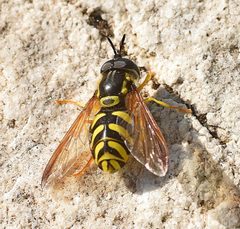
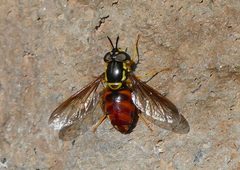
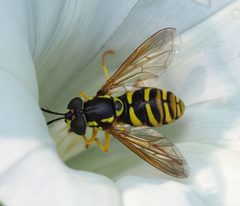
Chrysotoxum is a of hoverflies ( Syrphidae) comprising large, -mimicking . are characterized by very long , an oval with yellow stripes, and yellow patterns on the thoracic pleurae. The genus is chiefly Holarctic in distribution and is the sole member of the tribe Chrysotoxini. Species are morphologically uniform and difficult to distinguish, with coloration of legs, body size, and abdominal pattern connections showing considerable intraspecific variation.
Pronunciation
How to pronounce Chrysotoxum: //ˌkraɪsəˈtɒksəm//
These audio files are automatically generated. While they are not always 100% accurate, they are a good starting point.
Identification
Distinguished from other hoverfly by the combination of very long (especially the elongated third flagellomere), strongly convex and deeply margined , and specific wing venation ( transverse before middle of , R4+5 dipped into r4+5). The -mimicking appearance with yellow thoracic patterns and long antennae separates it from superficially similar wasp-mimicking syrphids. -level identification within Chrysotoxum is difficult due to morphological uniformity; leg color, overall size, and connections between abdominal stripes and spots vary considerably within species and are unreliable. Male terminalia have proven unhelpful for distinguishing most species.
Images
Appearance
Large hoverflies with -mimicking coloration. slightly wider than . pubescent, contiguous in males and widely separated in females. Prominent or angular and base visible in profile. slightly concave. Antennae long and erect, inserted on frontal angle; first two segments nearly equal, third segment () three to six times longer than preceding segments. strongly convex dorsally with deep marginal groove. Thoracic pleurae with yellow patterns. Wings with transverse located before middle of ; wing vein R4+5 distinctly dipped into r4+5.
Distribution
Chiefly Holarctic. Distribution records include Denmark, Norway, Sweden, and Vermont (United States).
Diet
diet not specified in available sources. Larvae prey upon root aphids.
Host Associations
- Root aphids - PreyLarvae are specialized of root aphids associated with nests
- Ants - Associated with nestsLarvae occur in nests where root aphids are present
Life Cycle
Larvae are specialized . Specific details on , pupal stages, or developmental timing not available.
Ecological Role
Predatory: larvae control root in nest .
Similar Taxa
- Other wasp-mimicking SyrphidaeChrysotoxum differs by its very long (especially the elongated ), specific wing venation characters, and deeply margined shape.
More Details
Taxonomic challenges
Many Chrysotoxum concerns remain unresolved due to limited morphological features available for characterization. Characters frequently used for identification—leg color, overall size, connections between abdominal stripes and spots—vary considerably within species. Male terminalia, often diagnostic in other hoverfly , are unhelpful for distinguishing most Chrysotoxum species.
Tribal placement
Chrysotoxum is the only in the tribe Chrysotoxini.