
Baccha cognata
Loew, 1863
American Dainty
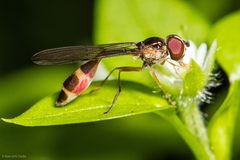
Baccha cognata, commonly known as the American Dainty, is a of hoverfly in the Syrphidae. It belongs to the tribe Bacchini within the Syrphinae. The Baccha is characterized by small, slender hoverflies with distinctive elongate . As with other Baccha species, are likely associated with wooded and are known for their delicate appearance and hovering typical of syrphid flies.
Pronunciation
How to pronounce Baccha cognata: //ˈbak.ka kɔɡˈnaː.ta//
These audio files are automatically generated. While they are not always 100% accurate, they are a good starting point.
Identification
Distinguished from other hoverflies by the combination of small size, extremely slender and elongate , and placement in the Baccha. Baccha cognata may be separated from by subtle morphological features of the male genitalia and abdominal patterning, though specific diagnostic characters require examination. The genus Baccha as a whole is recognizable among North American Syrphinae by the distinctive elongate body form that differs from the more robust build of many other hoverfly genera.
Images
Appearance
Small, slender hoverfly with an elongate, narrow characteristic of the Baccha. have the typical syrphid body plan with large , short , and a single pair of membranous wings (hindwings reduced to ). The body is generally delicate and -like in overall form, though specific coloration patterns for this are not documented in the provided sources.
Habitat
Wooded areas and forest edges, based on general ecological associations of the Baccha. The specific preferences of B. cognata are not separately documented.
Distribution
North America; specific range details not provided in available sources. The has been recorded in the United States based on iNaturalist observations.
Behavior
Ecological Role
Similar Taxa
- Other Baccha speciesShare the distinctive elongate, slender and small size; require examination of genitalic structures or subtle pattern differences for definitive identification.
- Sphaerophoria speciesSome have slender but differ in overall body proportions and wing venation; males often have more complex abdominal markings.
More Details
Taxonomic authority
Described by German entomologist Hermann Loew in 1863, a prominent dipterist of the 19th century.
Observation frequency
As of the knowledge cutoff, iNaturalist records 315 observations of this , indicating it is documented but not commonly encountered relative to more widespread hoverfly species.