
Pipiza
Fallén, 1810
Pitheads
Species Guides
3- Pipiza femoralis(White-haired Pithead)
- Pipiza puella(Sumac Gall Pithead)
- Pipiza quadrimaculata(Four-spotted Pipiza)
Pipiza is a of hoverflies (Syrphidae) containing approximately 12 European . are predominantly dark-colored and resemble small bees or . The genus is notable for its specialized larval : larvae are , feeding exclusively on gall-forming aphids on foliage. Species show strong association with forested landscapes, particularly deciduous forests and forest edges. Climate modeling indicates high distributional stability across Europe, with potential northward shifts in .
Pronunciation
How to pronounce Pipiza: /ˈpɪpɪza/
These audio files are automatically generated. While they are not always 100% accurate, they are a good starting point.
Identification
Dark coloration distinguishes Pipiza from many brightly patterned hoverfly such as Syrphus or Episyrphus. Within the tribe Pipizini, -level identification requires examination of male genitalia and other subtle morphological characters; several species groups (notably the luteitarsis group) have been defined based on shared derived characters. may be confused with small dark bees or , but possess the single pair of wings characteristic of Diptera and the typical hoverfly of sustained hovering.
Images
Appearance
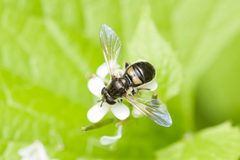
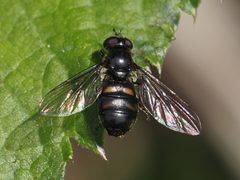
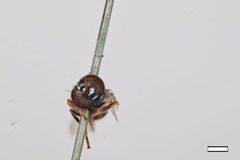
Most are dark-colored hoverflies with relatively inconspicuous markings. are small to medium-sized within the Syrphidae. Body coloration is typically black or dark brown, often with limited yellow or pale markings compared to more brightly colored syrphid . Wing venation and other morphological features follow the general pattern of the tribe Pipizini.
Habitat
Strongly associated with forested landscapes, particularly deciduous forests. Also found at forest edges, along tracks with tall herbs and shrubs, and in open areas with shrubby vegetation. Lowland and submontane regions support highest . Avoids large non-forested areas and fragmented forest patches.
Distribution
Europe: widespread across the continent with highest current in Central Europe. Balkan Peninsula: seven recorded, with concentration in the Dinaric mountain chain and Pannonian/subpannonian regions. North America: present in the northeastern United States (Vermont). Northern Europe predicted to become the primary diversity hotspot under future climate scenarios.
Diet
Larvae are , feeding on gall-forming aphids on foliage. feeding habits are not explicitly documented in available sources.
Host Associations
- gall-forming aphids - preyLarval food source; specific or not identified in available sources
Ecological Role
Larvae function as specialized of gall-forming aphids, potentially contributing to of these herbivores in forest and shrub . The degree of impact on has not been quantified.
Similar Taxa
- PipizellaCongeneric within tribe Pipizini; Pipiza generally larger and with different male genitalia structure
- HeringiaAnother dark-colored pipizine ; requires detailed morphological examination for separation
- TrichopsomyiaSimilar dark hoverflies in related tribe; differences in wing microtrichia and other fine structural features
More Details
Conservation status
Conservation implications have been considered for some , particularly in the context of specificity to forest landscapes and potential vulnerability to forest fragmentation
Climate change response
distribution modeling indicates high stability (>50% stable areas) for most species under projected climate scenarios to 2050-2070, with distributional shifts rather than range contractions predicted
Sources and further reading
- BugGuide
- Wikipedia
- GBIF taxonomy match
- iNaturalist taxon
- NCBI Taxonomy
- Catalogue of Life
- A review of the luteitarsis group of the genus Pipiza Fallen (Diptera: Syrphidae) with description of a new species from the Balkan Peninsula
- Models of the potential distribution and habitat preferences of the genus Pipiza (Syrphidae: Diptera) on the Balkan peninsula
- Stability and changes in the distribution of Pipiza hoverflies (Diptera, Syrphidae) in Europe under projected future climate conditions