
Cheilosiina
Genus Guides
3- Cheilosia(Blacklets)
- Ferdinandea(Copperback Flies)
- Hiatomyia(Deltawings)
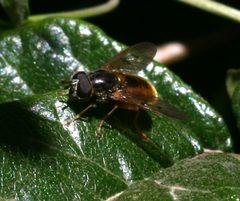
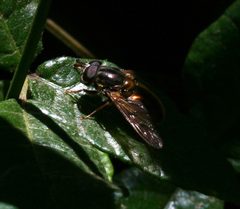
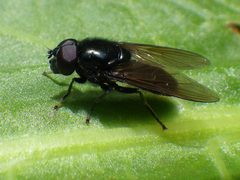
Cheilosiina is a subtribe of hoverflies within the Syrphidae. Members are small to medium-sized flies with distinctive facial and thoracic . The group is taxonomically defined by specific cranial and mouthpart structures rather than conspicuous external features. Many are associated with decaying organic matter and fungal .
Pronunciation
How to pronounce Cheilosiina: /kəˌɪloʊˈsaɪ.ə.nə/
These audio files are automatically generated. While they are not always 100% accurate, they are a good starting point.
Identification
Distinguished from other hoverfly subtribes by the combination of: facial or swelling; reduced pilosity on ; and specific modifications of the mouthparts adapted for feeding on yeasts and microorganisms. Differs from Bacchini by facial structure and larval associations. Separation from other Rhingiini subtribes requires examination of male genitalia and facial . Many require microscopic examination for definitive identification.
Images
Habitat
frequent moist, shaded environments including woodland edges, wetlands, and riparian zones. Larval include decaying wood, rotting vegetation, compost, and fungal fruiting bodies. Some associated with sap runs on trees.
Distribution
Holarctic distribution with primary diversity in the Palearctic region. Present across Europe, Asia, and North America. Records from and temperate zones; limited representation in Mediterranean and subtropical regions.
Seasonality
activity primarily spring through autumn in temperate regions, with peak abundance during summer months. Some active early spring, others extending into late autumn depending on latitude and elevation.
Diet
feed on nectar, pollen, and honeydew. Many visit small flowers of umbellifers, composites, and woodland herbs. Larvae feed on decaying organic matter, microorganisms, and fungal mycelia; some reported from rotting wood and under bark.
Life Cycle
Holometabolous development with , three larval instars, pupa, and stages. Larvae develop in moist decaying substrates. occurs within or near larval . time varies; some likely , others possibly multivoltine depending on climate.
Behavior
exhibit characteristic hovering typical of Syrphidae, often with rapid, darting movements. Males establish territories near larval resource sites or mating stations. Both sexes frequently rest on vegetation with wings folded over .
Ecological Role
contribute to pollination of small-flowered plants. Larvae function as decomposers in forest and wetland , processing decaying wood, leaf litter, and fungal material. Some may facilitate nutrient cycling in dead wood .
Human Relevance
No direct economic importance. Occasionally observed in gardens and compost heaps. Some potentially useful as indicators of forest health and decaying wood . No known pest status or beneficial applications in biocontrol.
Similar Taxa
- BacchiniOverlaps in general habitus and preferences, but distinguished by facial —Bacchini lack the prominent facial characteristic of Cheilosiina.
- PelecoceraFormerly included within broader Rhingiini concepts; distinguished by elongated mouthparts and more slender body form.
- RhingiinaSister subtribe within Rhingiini; separation requires examination of facial structure and male terminalia.
More Details
Taxonomic History
Cheilosiina has undergone repeated revision; historically treated as tribe Cheilosiini, now reduced to subtribe status within Rhingiini based on phylogenetic studies. Generic composition remains unstable with ongoing synonymization and splitting.
Larval Biology
Larval stages poorly documented for most ; known associations based on limited rearing records. The group shows ecological convergence with other saprophagous hoverfly lineages.