
Rhingiina
Genus Guides
1- Rhingia(Snouted Hoverflies)
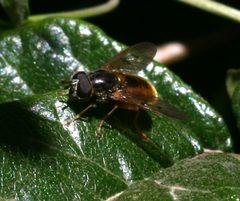
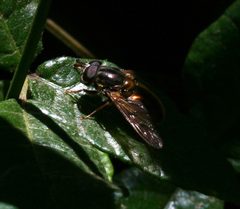
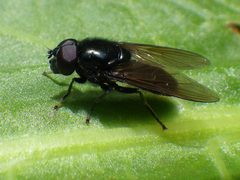
Rhingiina is a subtribe of hoverflies within the Syrphidae, characterized by distinctive morphological adaptations for nectar feeding. Members possess elongated mouthparts that enable access to deep-tubed flowers, a trait that distinguishes them from many other syrphid groups. The subtribe includes such as *Rhingia* and *Lycorina*. These flies are primarily found in the Palearctic and Oriental regions.
Pronunciation
How to pronounce Rhingiina: //rɪnˈdʒiːiːnə//
These audio files are automatically generated. While they are not always 100% accurate, they are a good starting point.
Identification
Rhingiina is distinguished from other Eristalinae subtribes by the possession of an exceptionally long , often exceeding body length, adapted for extracting nectar from tubular flowers. The is typically elongated and produced forward, giving a distinctive 'snouted' appearance. Wing venation includes a characteristic spurious typical of Syrphidae. Members lack the strong metallic coloration seen in some related subtribes.
Images
Habitat
Associated with flowering , particularly meadows, woodland edges, and gardens where deep-tubed flowers (especially Lamiaceae and Campanulaceae) are abundant. frequent flowers in humid, temperate to subtropical environments.
Distribution
Primarily Palearctic and Oriental regions, with highest diversity in Europe and Asia. The subtribe has limited representation in the Afrotropical region and is absent from the Americas.
Seasonality
activity peaks during late spring through summer in temperate regions, coinciding with peak flowering periods of preferred nectar sources.
Diet
feed exclusively on nectar and pollen from deep-tubed flowers; the elongated is a specialized for this feeding mode. Larval diet varies by but is generally unknown or poorly documented for most included .
Life Cycle
Larvae of at least some (e.g., *Rhingia*) develop in decaying organic matter, including and compost. Complete with , larval, pupal, and stages. Specific developmental details are poorly documented for most within the subtribe.
Behavior
exhibit strong flower fidelity, often remaining at individual inflorescences for extended feeding periods. is characteristically slow and hovering, typical of syrphid flies. Males establish territories near flowering patches.
Ecological Role
function as for deep-tubed flowers that may be inaccessible to other insect visitors. Larval stages contribute to decomposition processes in organic substrates.
Human Relevance
are beneficial as in natural and agricultural . No significant negative impacts on human activities are known.
Similar Taxa
- EristalinaShares Eristalinae but lacks the elongated and produced ; mouthparts are of moderate length and facial structure is unmodified.
- SericomyiinaAnother Eristalinae subtribe with generally shorter mouthparts and more robust body form; lacks the distinctive 'snouted' facial elongation.
More Details
Taxonomic note
The subtribe Rhingiina was historically treated as a tribe (Rhingiini) but was downranked following phylogenetic analyses showing it as a clade within the broader Rhingiini sensu lato. This reclassification reflects ongoing refinement of syrphid higher-level .