
Eristalina
Genus Guides
5- Eristalinus(Lagoon Flies)
- Eristalis(Drone Flies)
- Lycastrirhyncha(neotropical flower flies)
- Meromacrus(Elegant Flies)
- Palpada(Plushback Flies)
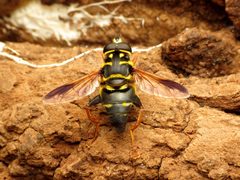
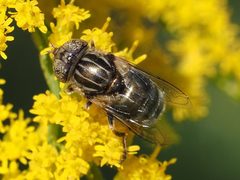
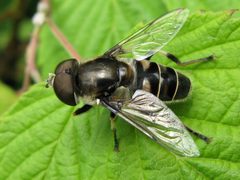
Eristalina is a subtribe of hoverflies ( Syrphidae) containing 17 . Members are notable mimics, with the drone fly (Eristalis tenax) being the most widely recognized example. The larvae, commonly called rat-tailed maggots, possess a distinctive breathing siphon that allows them to survive in low-oxygen aquatic environments. serve as , while larvae function as decomposers in organic-rich .
Pronunciation
How to pronounce Eristalina: /ˌɛrɪˈstɑːlɪnə/
These audio files are automatically generated. While they are not always 100% accurate, they are a good starting point.
Identification
can be distinguished from bees by having only two wings (bees have four) and short, stubby . Within Syrphidae, Eristalina is distinguished by subtribe-level characters; -level identification relies on features such as siphon length in larvae and subtle adult morphological differences. Eristalis are most commonly encountered in human-modified environments.
Images
Habitat
Larvae occupy diverse aquatic and semi-aquatic : putrid standing water, drainage ditches, saturated manure, tree hole water (Mallota, Mylopeta), bog mat pools (Sericomyia), and pond edges with emergent vegetation (Chrysogaster). They thrive in organic-rich, low-oxygen environments. are found in flowering including gardens, orchards, and wildflower areas.
Distribution
Widespread across multiple continents. The drone fly Eristalis tenax, introduced from Europe, is now established across the entire North American continent. Other have more restricted distributions based on specific aquatic requirements.
Diet
Larvae filter bacteria and other microbes from decaying organic matter in water. nectar on flowers including lavender, catmint, daisies, sunflowers, yarrow, and orchard blossoms.
Life Cycle
are laid in or near suitable aquatic or moist organic substrates. Larvae develop through instars using the siphon to breathe at the water surface while feeding below. Mature larvae exit water to pupate on dry land. emerge as .
Behavior
Larvae remain submerged, connected to the surface via their extensible breathing siphon, allowing continuous respiration while feeding. hover at flowers and are frequently mistaken for bees by observers.
Ecological Role
Larvae function as decomposers in aquatic , processing organic matter in low-oxygen environments inaccessible to many other . serve as of wildflowers and crop plants.
Human Relevance
are beneficial in agricultural and garden settings. Larvae are sometimes encountered in rain gutters, compost, and water gardens, occasionally causing concern. Frequently misidentified as honey bees in popular media and stock photography.
Similar Taxa
- SericomyiiniAnother tribe within Eristalinae whose larvae are also called rat-tailed maggots; distinguished by subtribe-level taxonomic characters and larval preferences (Sericomyia in bog mat pools)
- EumeriniAnother tribe of Eristalinae with aquatic larvae, but lacking the distinctive long breathing siphon of Eristalina
- honey bees (Apidae) are frequently mistaken for bees due to convergent mimicry; distinguished by two wings versus four, , and short
Misconceptions
are commonly misidentified as honey bees in photographs, publications, and public discourse. The biblical account of bees spontaneously appearing from rotting animal carcasses may have originated from observations of rat-tailed maggots in decomposing corpses.
More Details
Siphon Variation
The length of the breathing siphon varies greatly among and correlates with depth and oxygen availability. This morphological diversity reflects adaptive radiation across aquatic .
Historical Introduction
Eristalis tenax was likely introduced to North America from Europe long ago and is now one of the most widespread and commonly encountered syrphid on the continent.