
Rhingia
Scopoli, 1763
Snouted Hoverflies
Species Guides
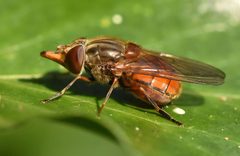
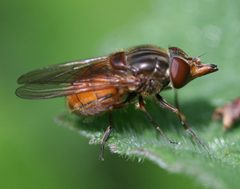
1- Rhingia nasica(American Snout Fly)
Rhingia is a of hoverflies ( Syrphidae) characterized by an elongated snout-like rostrum. The genus contains approximately 11 distributed across the Palearctic region. Larvae develop in animal , while visit flowers for nectar and pollen.
Pronunciation
How to pronounce Rhingia: /ˈrɪn.dʒi.ə/
These audio files are automatically generated. While they are not always 100% accurate, they are a good starting point.
Identification
The elongated rostrum is the primary diagnostic feature distinguishing Rhingia from other hoverfly . -level identification requires examination of male terminalia; a key to species is available for European faunas.
Images
Appearance
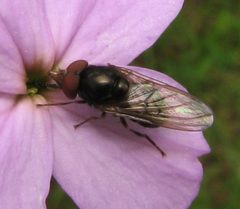
possess a distinctive elongated rostrum projecting forward from the , giving the appearance of a long snout. Body form is typical of hoverflies with large and a single pair of wings. The rostrum length and shape vary among and may show .
Habitat
are found in open including meadows, forest edges, and agricultural areas where flowering plants occur. Larval habitat is associated with animal in terrestrial environments.
Distribution
Palearctic distribution, with records from Europe (including Poland, Denmark, Norway, Sweden), Asia, and North America (Vermont, USA).
Diet
feed on nectar and pollen from flowers. Larvae are saprophagous, developing in animal .
Life Cycle
Larvae develop in animal . emerge and feed on floral resources. Specific details of and stages are not well documented in available sources.
Behavior
are flower visitors. No specific behavioral details such as patterns or mating are documented in the available sources.
Ecological Role
contribute to pollination through nectar and pollen feeding. Larvae participate in nutrient cycling through decomposition of animal .
Human Relevance
No documented economic or medical significance. may be observed by naturalists and photographers due to their distinctive appearance.
Similar Taxa
- Other Syrphidae generaLack the elongated rostrum characteristic of Rhingia; rostrum length is the primary distinguishing feature.
More Details
Taxonomic note
The authority is Scopoli, 1763. The genus is placed in tribe Rhingiini within Eristalinae. Three occur in Poland: R. borealis, R. campestris, and R. rostrata.