
Criorhina caudata
Curran, 1925
Red-tailed Bumblefly
Pronunciation
How to pronounce Criorhina caudata: /ˌkraɪoʊrəˈhiːnə kɔːˈdeɪtə/
These audio files are automatically generated. While they are not always 100% accurate, they are a good starting point.
Identification
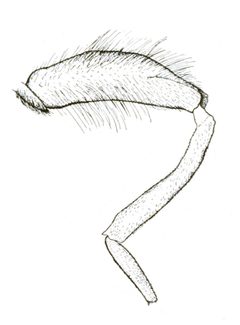
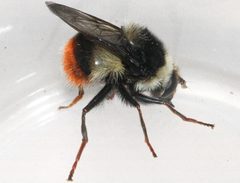
Distinguished from other Criorhina by the red-tailed coloration pattern. Separated from actual bumblebees (Bombus) by the single pair of wings (Diptera), short with , and the presence of a spurious in the wing—a characteristic feature of Syrphidae. The broad, flattened and structure differ from those of similar syrphid . C. caudata specifically differs from in the details of abdominal color pattern, particularly the reddish tail.
Images
Appearance
are robust, densely hairy flies that closely resemble bumblebees in overall appearance. The "Red-tailed Bumblefly" suggests a reddish coloration on the terminal abdominal segments. Members of the Criorhina typically have large that meet at the top of the in males, and a broad, flattened . The body is covered in pile that mimics the setation of bumblebees (Bombus spp.).
Distribution
Canada and the United States. Specific preferences within this range are not documented in available sources.
Behavior
are known to visit flowers. The bumblebee-like appearance serves as protective mimicry (), deterring that avoid stinging Hymenoptera.
Ecological Role
As a flower-visiting insect, likely contributes to pollination. Larval is unknown but related syrphid larvae are often associated with rotting wood or decaying organic matter.
Human Relevance
Documented through citizen science observations (iNaturalist). No significant documented economic or medical importance.
Similar Taxa
- Criorhina berberinaAnother North American Criorhina ; differs in abdominal color pattern without red tail.
- Bombus spp.Bumblebees that are mimicked by C. caudata; distinguished by two pairs of wings, longer , and different wing venation.
- Mallota spp.Another of bumblebee-mimicking syrphids; differs in facial structure and wing details.
More Details
Taxonomic history
Described by Charles Howard Curran in 1925. The specific epithet "caudata" refers to the tail-like or caudal appearance, likely alluding to the distinctive red tail.
Observation records
As of available data, 49 observations documented on iNaturalist, indicating it is infrequently encountered or underreported relative to more common syrphid .
Sources and further reading
- BugGuide
- Wikipedia
- GBIF taxonomy match
- iNaturalist taxon
- NCBI Taxonomy
- Catalogue of Life
- Southernmost crocodile newt record is a threatened new species |
- Simplified method to survey amphibians will aid conservation | Blog
- New to science newts from Vietnam with an important message for Biodiversity Day 2020 | Blog