
Mallota sackeni
Williston, 1882
brown-haltered mimic fly, brown-haltered bee-mimic fly
Mallota sackeni is a of hover fly ( Syrphidae) native to western North America. The species is known for its -mimicry, a common defensive among syrphid flies. are active , while larvae develop in aquatic or semi-aquatic environments typical of the tribe Eristalini. The species has been documented from British Columbia to southern California and eastward to Idaho and Utah.
Pronunciation
How to pronounce Mallota sackeni: /ˈmælətə ˈsakɛni/
These audio files are automatically generated. While they are not always 100% accurate, they are a good starting point.
Identification
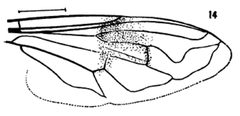
The brown provide a key distinguishing feature from similar Mallota . As with many syrphid flies, precise identification requires examination of wing venation, facial features, and male genitalia. The species can be separated from other western North American Mallota by the combination of geographic range and haltere coloration.
Images
Habitat
Associated with woodland edges and riparian areas where larval development sites occur. frequent flowers for nectar and pollen. Larval likely includes aquatic or semi-aquatic environments with decaying organic matter, consistent with tribe Eristalini.
Distribution
Western North America from British Columbia south to southern California, extending east to Idaho and Utah.
Diet
feed on nectar and pollen. Larvae are presumed to filter-feed on microorganisms in decaying organic matter in aquatic or semi-aquatic environments, based on tribe-level characteristics, though this has not been specifically documented for this .
Life Cycle
Complete with , larval, pupal, and stages. Larvae are aquatic or semi-aquatic 'rat-tailed maggot' type typical of Eristalini. Specific developmental timing undocumented.
Behavior
exhibit flower-visiting for feeding. Larval stage adapted to low-oxygen aquatic environments using respiratory siphon. Specific behavioral observations for this are sparse in literature.
Ecological Role
function as . Larvae contribute to nutrient cycling in aquatic through decomposition of organic matter. Specific ecological studies for this are lacking.
Human Relevance
Contributes to services through pollination. No documented economic importance or pest status. Potential for wetland and riparian ecosystem health in western North America.
Similar Taxa
- Mallota posticataSimilar -mimic syrphid in same ; distinguished by coloration and geographic range (M. posticata more eastern)
- Other Eristalini genera (Eristalis, Helophilus)Similar larval and ; distinguished by -level characters of structure and wing venation
More Details
Nomenclatural Note
Catalogue of Life and GBIF list this as a synonym of Imatisma sackeni, reflecting ongoing taxonomic uncertainty or recent reclassification in the Mallota
Data Availability
Despite 70 iNaturalist observations, detailed natural history information specific to this remains sparse in primary literature
Sources and further reading
- BugGuide
- Wikipedia
- GBIF taxonomy match
- iNaturalist taxon
- Catalogue of Life
- Ebony Grasshopper
- Valley Grasshopper
- Bug Eric: Eight Illinois Wasp and Bee Mimics in Twenty Minutes
- Bug Eric: Fly Day Friday: Rat-tailed Maggots
- Hover Flies Identified: Researchers Tackle 20,000 Syrphid Specimens in Illinois Collection
- Acanthaceae | Beetles In The Bush