
Ceriana tridens
(Loew, 1872)
Western Wasp Fly
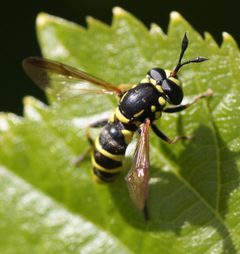
Ceriana tridens is a syrphid fly native to western North America, commonly known as the Western Fly. It exhibits striking wasp mimicry, with coloration resembling yellowjackets or paper wasps. The species has been documented ovipositing in tree fissures, where larvae feed on sap.
Pronunciation
How to pronounce Ceriana tridens: /ˈsɛriˌɑnə ˈtraɪˌdɛnz/
These audio files are automatically generated. While they are not always 100% accurate, they are a good starting point.
Identification
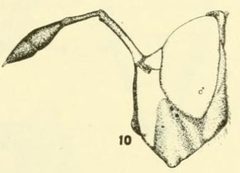
Distinguished from actual by having only two wings (wasps have four), presence of on , and spongelike mouthparts. Distinguished from other syrphid flies by wasp-mimic and specific antennal structure. Can be separated from other Ceriana by geographic range and subtle morphological features.
Images
Appearance
have a slender body with -like coloration, typically featuring yellow and black patterning. Possesses two wings (characteristic of Diptera), a knoblike bristle () at the end of each , and spongelike mouthparts. The overall body shape mimics vespid wasps including Western yellowjacket (Vespula pensylvanica) and European paper wasp (Polistes dominula).
Habitat
Associated with trees and woody vegetation. observed in areas with flowering plants. Larval includes fissures and crevices in tree bark where sap accumulates.
Distribution
Western North America. Documented from California (Lake Berryessa, Napa County) and surrounding regions.
Diet
feed on nectar and pollen. Larvae feed on sap from trees.
Life Cycle
Females oviposit in fissures of trees. Larvae hatch and develop within these crevices, feeding on tree sap.
Behavior
hover helicopter-like over flowers before landing to forage. Exhibits of vespid , likely conferring protection from .
Ecological Role
function as . Larvae contribute to nutrient cycling in tree microhabitats.
Human Relevance
Occasionally encountered by picnickers and outdoor recreationists due to its -like appearance, potentially causing alarm despite being harmless. Subject of nature photography, including award-winning images displayed at international entomological exhibitions.
Similar Taxa
- Vespula pensylvanicaWestern yellowjacket shares similar yellow-black coloration but has four wings, lacks , and has chewing mouthparts
- Polistes dominulaEuropean paper wasp resembles C. tridens in body shape and coloration but has four wings and different antennal structure
- Other Ceriana species share -mimic but differ in geographic distribution and subtle morphological details
Misconceptions
Frequently mistaken for stinging due to protective mimicry; the is harmless and lacks a stinger.
More Details
Photographic documentation
The has been featured in international entomological photography competitions, including the Insect Salon at the Entomological Society of America meeting, with images documenting oviposition in tree fissures.