
Callicera
Panzer, 1806
Pine Flies
Species Guides
2- Callicera duncani(Orange-legged Longhorn)
- Callicera erratica(golden pine fly)
Callicera is a Holarctic of hoverflies (Syrphidae) comprising rare, medium-sized to large . exhibit metallic coloration, strikingly long , and bumblebee mimicry. Larvae develop as saprophages in moist rot-holes of overmature trees. The genus has been employed as a bioindicator for old-growth forest .
Pronunciation
How to pronounce Callicera: /ˌkælɪˈsɪərə/
These audio files are automatically generated. While they are not always 100% accurate, they are a good starting point.
Identification
Distinguished from other hoverfly by the combination of: (1) extremely long with elongated scape and , (2) metallic body coloration, (3) bumblebee-mimicking robust build, and (4) wing venation characteristic of Eristalinae. Similar metallic syrphids (e.g., some Cheilosia, Ferdinandea) lack the exaggerated antennal length.
Images
Appearance
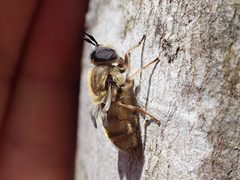
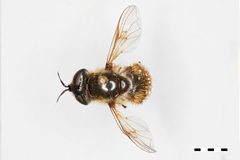
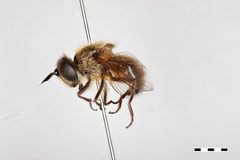
Medium-sized to large hoverflies with wing length 9.75–15 mm. Body metallic, often with green, blue, or coppery reflections. exceptionally long, extending well beyond . Overall form mimics bumblebees (Bombus).
Habitat
Associated with overmature trees containing moist rot-holes. frequent woodland and forest edge . Presence indicates long-established woodland with standing dead wood and tree cavities.
Distribution
Holarctic distribution. Records confirmed from Denmark (DK), Norway (NO), and Sweden (SE). Broader range includes Palearctic and Nearctic regions.
Life Cycle
Larval stage develops in moist rot-holes of overmature trees, feeding as saprophages on decaying organic matter. and activity period not specified in available sources.
Ecological Role
Larvae contribute to nutrient cycling in decaying wood microhabitats. may participate in pollination. All considered rare; presence indicates high-quality old-growth forest .
Human Relevance
Used as bioindicators for conservation assessment of ancient woodland and old-growth forest . Rarity makes them of conservation interest.
Similar Taxa
- FerdinandeaAlso metallic Eristalinae with robust build, but much shorter and body form less distinctly bumblebee-like.
- CheilosiaSome metallic, but generally smaller with short and different wing venation.
More Details
Conservation Status
All within the are considered rare, reflecting dependence on vanishing old-growth forest with mature rot-hole trees.
Taxonomic Authority
Authorship variously cited as Panzer, 1806 or Panzer, 1809; 1806 is the accepted date per Catalogue of Life.