
Callicera erratica
(Walker, 1849)
golden pine fly, American Golden Longhorn
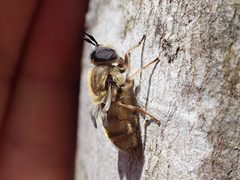
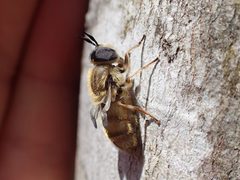
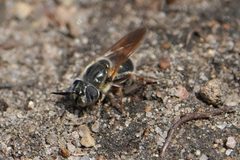
Callicera erratica is a rare of syrphid fly found in the northeastern United States and Canada. are associated with flowers, where they feed on nectar and pollen. The species is notable for its specialized larval : water-filled rot holes and cavities in old, living conifer trees. Its "golden pine fly" reflects both its coloration and this unique ecological association with pine trees.
Pronunciation
How to pronounce Callicera erratica: //kælɪˈsɪərə ɛˈrætɪkə//
These audio files are automatically generated. While they are not always 100% accurate, they are a good starting point.
Images
Habitat
Larval is restricted to water-filled rot holes and cavities within old, living conifer trees. habitat includes flowering vegetation in forested areas.
Distribution
Northeastern United States and Canada.
Diet
feed on nectar and pollen from flowers. Larval diet is unknown but presumably involves organic matter in the water-filled tree cavities they inhabit.
Host Associations
- old, living conifers - larval water-filled rot holes and cavities
Life Cycle
Larvae develop in water-filled rot holes and cavities of old, living conifer trees. emerge and are found on flowers.
Behavior
have been observed visiting flowers. Larvae are confined to water-filled cavities in conifer trees.
Ecological Role
may contribute to pollination through flower visitation. Larvae likely function as decomposers or in the specialized microhabitat of tree cavities.
More Details
Conservation Status
The is described as rare, likely due to its specialized requirements involving old, living conifer trees with water-filled cavities.
Taxonomic Notes
The "American Golden Longhorn" appears to be a misnomer, as this is a fly (Diptera) not a (Coleoptera), and "longhorn" typically refers to beetles with long . The more accurate common name is "golden pine fly."