
Chrysogaster antitheus
Walker, 1849
Short-haired Wrinkle Fly, Short-haired Wrinklehead
Chrysogaster antitheus is a small syrphid fly (7–8 mm) found in North America, commonly known as the Short-haired Wrinkle Fly. are flower visitors that feed on nectar and pollen. The larvae are aquatic "rat-tailed" maggots with a short respiratory siphon, inhabiting pond edges and emergent vegetation.
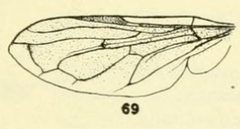
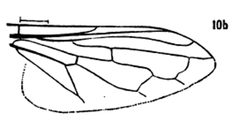
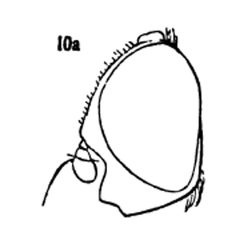
Pronunciation
How to pronounce Chrysogaster antitheus: //krɪˈsɒɡæstər ænˈtɪθiːəs//
These audio files are automatically generated. While they are not always 100% accurate, they are a good starting point.
Identification
Distinguished from similar Chrysogaster by the combination of: small size (7–8 mm); in both sexes; heavily wrinkled female with narrow smooth area; very small with third segment much larger in females; greenish black legs; and distinctive wing venation with M2 prominent as a spur off M1. The short respiratory siphon of larvae (relative to Eristalis and other ) is diagnostic for the genus.
Images
Habitat
frequent flowers. Larvae inhabit aquatic environments along pond edges and among emergent vegetation, with a short respiratory siphon adapted to these shallow water .
Distribution
North America: Canada and United States.
Diet
feed on nectar and pollen from flowers. Larvae filter bacteria and other microbes from organic matter in water.
Life Cycle
Aquatic larval stage with rat-tailed maggot form; larvae possess a short extensible breathing siphon connecting to water surface. Upon maturity, larvae seek dry land to pupate; pupal capsule is hard and resembles a tiny mouse in shape.
Behavior
hover and remain nearly motionless in . Larvae maintain connection to water surface via respiratory siphon while filtering food from substrate.
Ecological Role
function as . Larvae contribute to nutrient cycling in aquatic through microbial filtration.
Human Relevance
are of wildflowers and cultivated plants. Larvae may occur in water gardens and container gardens, where they can be mistaken for mosquito larvae; they are harmless and do not require control measures.
Similar Taxa
- Eristalis tenaxLarger drone fly with longer larval siphon; are mimics with different coloration and wing venation
- Other Chrysogaster speciesRequire examination of antennal proportions, wrinkling patterns, and subtle wing venation differences
More Details
Taxonomic Note
Catalogue of Life lists this as a synonym of Chrysogaster antithea, though both names remain in use in different sources.