
Prosopochrysini
Enderlein, 1914
Genus Guides
2- Myxosargus(soldier flies)
- Nothomyia
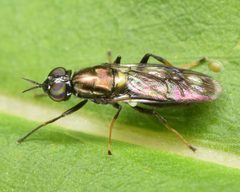
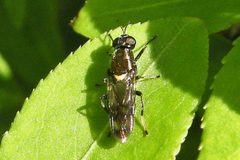
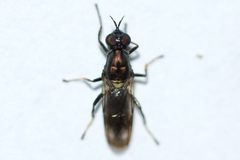
Prosopochrysini is a tribe of soldier flies (Stratiomyidae) established by Enderlein in 1914. It comprises approximately 9 and at least 40 described distributed across multiple continents. The tribe is classified within the Stratiomyinae. Members are known from diverse , though specific ecological details remain limited for many .
Pronunciation
How to pronounce Prosopochrysini: /prɔˌsoʊpoʊˈkrʌɪsɪnaɪ/
These audio files are automatically generated. While they are not always 100% accurate, they are a good starting point.
Identification
Prosopochrysini can be distinguished from other Stratiomyidae tribes by combination of morphological characters including antennal structure and wing venation patterns. Diagnostic features for the tribe include specific arrangements of the antennal and modifications of the facial region. -level identification requires examination of genitalia and other fine structural details; the tribe includes with varied body forms from slender (Nothomyia) to more robust builds (Prosopochrysa, Myxosargus).
Images
Distribution
Recorded from multiple continents including the Americas, Africa, Asia, and Australasia. Distribution varies by : Myxosargus and Prosopochrysa are primarily Old World; Nothomyia occurs in the Neotropics; Brianmyia is known from South America.
Similar Taxa
- StratiomyiniBoth tribes occur in Stratiomyinae and share general soldier fly ; Prosopochrysini differs in antennal structure and facial characteristics.
- SarginiSargini is another tribe in Stratiomyidae with overlapping geographic ranges; Prosopochrysini typically lacks the pronounced thoracic armature common in many Sargini .
More Details
Genera composition
The tribe includes the following : Acanthasargus, Brianmyia, Cyphoprosopa, Exochostoma, Hoplistopsis, Melanoichroa, Myxosargus, Nothomyia, Prosopochrysa, and Rhaphiocerina.
Taxonomic history
Authorship attributed to Enderlein, 1914. The tribe has undergone revision with some transferred in or out based on phylogenetic analyses; Brianmyia was described as recently as 2012.