
Nothomyia
Loew, 1869
Species Guides
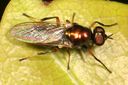
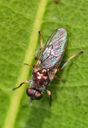
1Nothomyia is a of soldier flies ( Stratiomyidae) established by Hermann Loew in 1869. The genus comprises approximately 20 described distributed primarily in the Neotropical and Oriental regions. Species are recognized by their distinctive metallic coloration and modified leg structures. The genus is classified within the tribe Prosopochrysini of the Stratiomyinae.
Pronunciation
How to pronounce Nothomyia: /nɔˈθoʊmiə/
These audio files are automatically generated. While they are not always 100% accurate, they are a good starting point.
Identification
Nothomyia can be distinguished from other Prosopochrysini by the combination of metallic green, blue, or bronze body coloration and the presence of modified, often flattened or expanded, hind . The is further characterized by a reduced number of antennal flagellomeres and specific wing venation patterns including a characteristic bend in R4+5. Males typically exhibit more pronounced secondary sexual modifications on the legs than females.
Images
Habitat
occur in tropical and subtropical forest environments. Larval stages have been associated with decaying organic matter in moist terrestrial . are frequently observed in shaded understory vegetation near streams or in humid woodland clearings.
Distribution
Neotropical region (Central and South America, Caribbean) and Oriental region (southern China, Yunnan Province). Records include Brazil, Rica, Panama, Colombia, Venezuela, and China.
Similar Taxa
- ProsopochrysaAlso metallic Prosopochrysini with similar body form, but Prosopochrysa lacks the modified hind characteristic of Nothomyia and typically has longer with more flagellomeres.
- MicrochrysaShares metallic coloration but differs in wing venation (R4+5 without the distinctive bend) and lacks the leg modifications present in Nothomyia; also generally smaller in body size.
More Details
Taxonomic history
The was erected by Loew in 1869 with Nothomyia calopus as the type . Several species were subsequently transferred from other genera, particularly from Chrysochroma and related genera, based on leg and genitalic characters.
Species diversity
The contains 20 described as of 2024, with the most recent descriptions from Yunnan, China (N. elongoverpa and N. yunnanensis, 2012). Undescribed species are known from additional Neotropical localities.