
Thecophora
Rondani, 1845
Species Guides
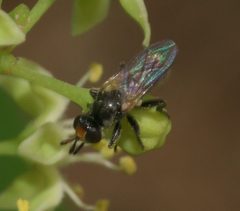
1A of medium-sized conopid flies (4–7 mm) in the Conopidae, characterized by black coloration with variable abdominal dusting and distinctive leg markings. are active flower visitors from May to October. Larvae are internal of halictid bees, with females depositing single into flying . The genus includes three in Britain, with *Thecophora atra* being the most widely distributed and the subject of a complete sequencing effort.
Pronunciation
How to pronounce Thecophora: /ˌθɛkəˈfɔːrə/
These audio files are automatically generated. While they are not always 100% accurate, they are a good starting point.
Identification
Medium-sized black flies (4–7 mm). Distinguished from by specific combinations of size, abdominal dusting , and leg coloration. *Thecophora atra* specifically identified by smaller size relative to *T. fulvipes*, reduced abdominal dusting, and legs that are black with yellow "knees" and yellow basal half of hind .
Images
Habitat
Chalk, calcareous, or basi-neutral , particularly -rich grasslands. Coastal records also occur.
Distribution
Widely distributed in Britain and Ireland; more frequent in southern Britain, progressively scarcer northward with few Scottish records.
Seasonality
active May to October, with peak abundance in August.
Diet
feed on nectar and pollen from flowers. Larvae are obligate internal , feeding on and tissues of halictid bees.
Host Associations
- Halictus spp. - confirmed documented outside Britain
- Lasioglossum spp. - confirmed documented outside Britain
- Lasioglossum morio - observational observed near colonies; unconfirmed
- Halictus spp. - observationalBritish records observational only; unconfirmed through rearing
Life Cycle
. Female deposits single into flying . First instar larva develops within host abdomen while host remains active. Third instar larva becomes tapered anteriorly, migrates to feed on thoracic contents through petiole, killing host. occurs within host abdomen.
Behavior
visit diverse flowers including ragwort (*Jacobaea*/*Senecio*), rough hawkbit (*Leontodon hispidus*), devil's-bit scabious (*Succisa pratensis*), water mint (*Mentha aquatica*), hawkweed (*Hieracium*), speedwells (*Veronica*), common rock-rose (*Helianthemum nummularium*), and thistles. Females attack in to oviposit.
Ecological Role
of halictid bees; contributes to of .
Human Relevance
Subject of sequencing as part of the Darwin Tree of Life Project (*T. atra*). No direct economic or medical significance.
Similar Taxa
- Thecophora fulvipesOverlapping distribution; distinguished by larger size, denser abdominal dusting, and different leg coloration
- Other Conopidae generaShare lifestyle but differ in associations and morphological details