
Thecophora propinqua
Adams, 1903
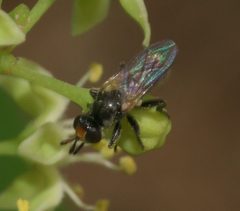
Thecophora propinqua is a of thick-headed fly in the Conopidae, described by Adams in 1903. As a member of this family, it is likely an endoparasitoid of other insects, particularly bees or , which is the characteristic of conopid flies. The Thecophora contains multiple species distributed across North America.
Pronunciation
How to pronounce Thecophora propinqua: //θiːˈkɒfərə proʊˈpɪŋkwə//
These audio files are automatically generated. While they are not always 100% accurate, they are a good starting point.
Identification
Thecophora are small to medium-sized flies with a characteristically thickened , giving the its of "thick-headed flies." Species-level identification within Thecophora typically requires examination of specific morphological features including head shape, structure, and abdominal patterning. T. propinqua can be distinguished from by subtle differences in these characters, though precise diagnostic features require taxonomic knowledge.
Images
Distribution
North America. The has been recorded across multiple regions of the continent based on iNaturalist observations and museum collections.
Host Associations
- Hymenoptera - endoparasitoidConopidae are known endoparasitoids of bees and . The specific (s) of T. propinqua have not been documented.
Behavior
conopid flies are typically observed visiting flowers to feed on nectar. Females intercept insects in to deposit , after which larvae develop internally within the host, eventually killing it.
Ecological Role
As an endoparasitoid of Hymenoptera, T. propinqua contributes to of and . This - interaction represents a significant mortality factor for some native bee .
Similar Taxa
- Other ConopidaeOther thick-headed flies share the general body plan of enlarged and lifestyle. Thecophora specifically can be confused with such as T. occidensis or T. longirostris, requiring careful examination of head capsule shape and abdominal coloration for separation.
- Other Diptera familiesConopidae may superficially resemble other flower-visiting flies such as Syrphidae or Bombyliidae, but are distinguished by the distinctly thickened and characteristic wing venation.
More Details
Taxonomic note
The Thecophora was historically placed in the tribe Myopini within Myopinae, though some classifications have treated these ranks differently. The was described by Adams in 1903, with the specific epithet "propinqua" meaning "near" or "neighboring," possibly referring to its similarity to related species.
Data availability
Detailed biological information for T. propinqua specifically is sparse in the literature. Most knowledge of the is inferred from -level characteristics of Conopidae and -level patterns in Thecophora.
Sources and further reading
- BugGuide
- GBIF taxonomy match
- iNaturalist taxon
- Catalogue of Life
- The Native Bees in the UC Davis Bee Haven | Bug Squad
- Meloidae Holdings | Entomology Research Museum
- Hello There, Little Leafcutter Bee | Bug Squad
- Ever See a Leafcutter Bee Sunning Itself on a Milkweed Leaf? | Bug Squad
- Asilidae | Beetles In The Bush | Page 2