
Lepiseodina conspicua
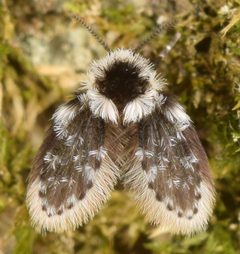
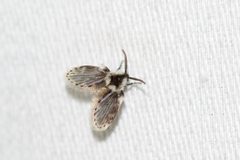
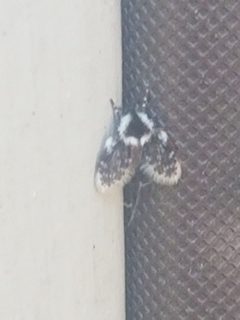
Lepiseodina conspicua is a of moth fly in the Psychodidae. It is a small, delicate dipteran with distinctive wing venation and body patterning. The species has been documented primarily through photographic observations on iNaturalist, with over 600 records contributing to its known distribution. Like other psychodids, it belongs to a group commonly known as drain flies or moth flies due to their fuzzy appearance and aquatic larval .
Pronunciation
How to pronounce Lepiseodina conspicua: //ˌlɛp.iː.siˈoʊ.dɪ.nə kənˈspɪ.kju.ə//
These audio files are automatically generated. While they are not always 100% accurate, they are a good starting point.
Identification
Lepiseodina conspicua can be distinguished from other Psychodidae by its relatively large size and conspicuous wing patterning for the . The shows characteristic venation with forks in R4 and R5, and the wing has distinct dark markings that create a patterned appearance. The body is covered with setae giving a -like, fuzzy appearance typical of the . Separation from requires examination of genitalic structures and detailed wing venation patterns.
Images
Distribution
Documented observations span multiple continents including North America, Central America, South America, Europe, Africa, Asia, and Australia, suggesting a wide distribution. The 639 iNaturalist observations indicate presence in both tropical and temperate regions, though precise native versus introduced range remains unclear.
Similar Taxa
- Psychoda spp.Similar small size and -like appearance, but Psychoda generally lack the distinct wing patterning and larger body size of Lepiseodina conspicua; wing venation details differ in fork placement.
- Clogmia spp.Share aquatic larval and fuzzy appearance; Clogmia typically have more uniformly colored wings without the conspicuous patterning that gives L. conspicua its specific epithet.
- Other Lepiseodina species require microscopic examination of genitalia and precise wing venation measurements for reliable separation; L. conspicua is among the more frequently photographed in the due to its distinctive appearance.