
Lepiseodina
Enderlein, 1937
Species Guides
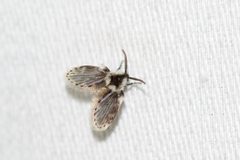
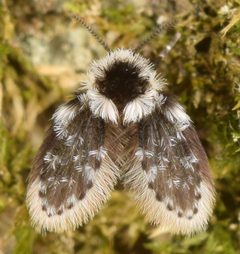
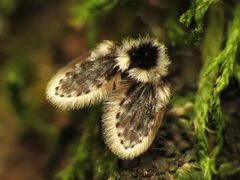
2Lepiseodina is a of moth flies (Diptera: Psychodidae) established by Enderlein in 1937. Members of this genus are small, hairy flies belonging to the commonly known as drain flies or sand flies. The genus has been recorded from North America and Europe based on limited occurrence data.
Pronunciation
How to pronounce Lepiseodina: /lɛˈpɪsiəˌdaɪnə/
These audio files are automatically generated. While they are not always 100% accurate, they are a good starting point.
Identification
Lepiseodina can be distinguished from other Psychodidae by wing venation patterns and genitalia structure, though specific diagnostic features require examination. The genus is morphologically similar to other Psychodinae but differs in details of the male hypopygium and wing microtrichia arrangement.
Images
Habitat
As with other Psychodidae, in this are associated with moist, organic-rich environments. Specific microhabitat preferences for Lepiseodina remain poorly documented.
Distribution
Recorded from Sweden, Norway, and the eastern United States (Vermont). The appears to have a disjunct Holarctic distribution, though this may reflect limited sampling effort rather than true rarity.
Ecological Role
Lepiseodina larvae likely function as decomposers in moist organic substrates, contributing to nutrient cycling in their . flies probably serve as prey for small .
Human Relevance
No direct economic or medical importance has been documented for this . Unlike some Psychodidae, Lepiseodina is not known to be associated with human structures or transmission.
Similar Taxa
More Details
Taxonomic history
The was erected by Günther Enderlein in 1937. The type and number of included species remain uncertain based on available sources. The genus has received limited taxonomic revision since its original description.
Research gaps
Basic , larval , and complete inventory are unknown for Lepiseodina. Most knowledge derives from specimens in museum collections rather than field studies.