
Phytoliriomyza melampyga
(Loew, 1869)
Jewelweed Leaf-miner Fly
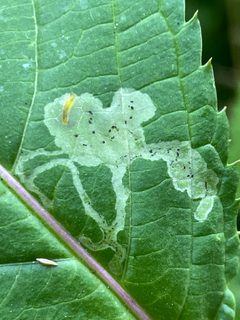
Phytoliriomyza melampyga is a small fly in the Agromyzidae, commonly known as the Jewelweed Leaf-miner Fly. The is recognized by distinctive yellow markings on the , scutellum, and . Its larvae are leaf miners that feed on Himalayan balsam (Impatiens glandulifera). The species has been recorded across North America and Europe.
Pronunciation
How to pronounce Phytoliriomyza melampyga: //ˌfaɪtoʊˌlaɪriˈoʊmɪzə ˌmɛləmˈpaɪɡə//
These audio files are automatically generated. While they are not always 100% accurate, they are a good starting point.
Identification
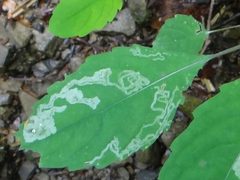
The combination of yellow , yellow scutellum, and yellow-banded distinguishes this from other Phytoliriomyza. For definitive identification, examination of male genitalia is typically required, as is standard for Agromyzidae. Larval identification is possible through the plant association with Impatiens glandulifera and the characteristic serpentine or blotch leaf mines produced.
Images
Appearance
display bright yellow coloration on the , scutellum, and as bands on the . These markings provide a distinctive visual pattern among Phytoliriomyza . Size and detailed body proportions are not well documented in available sources.
Habitat
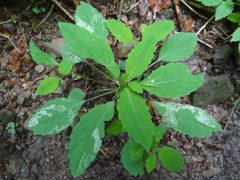
Associated with riparian and disturbed where the plant Impatiens glandulifera occurs. Himalayan balsam thrives in moist, nutrient-rich soils along riverbanks, ditches, and woodland edges.
Distribution
Recorded from Canada, the United States, and Europe. GBIF data confirm presence in Belgium. The Palearctic distribution is noted in some sources, though North American records suggest a broader range or possible introduction.
Diet
Larvae feed as leaf miners on Impatiens glandulifera (Himalayan balsam). feeding habits are not documented.
Host Associations
- Impatiens glandulifera - larval plantleaf mining
Life Cycle
Larvae develop within leaves of Impatiens glandulifera, creating visible mines. likely occurs within the leaf mine or in soil, though specific details are not documented. timing is not well established.
Behavior
Larval consists of feeding between leaf epidermal layers, producing characteristic mines. behavior is poorly documented.
Ecological Role
As a herbivore on Impatiens glandulifera, the may contribute to of this plant in regions where it has been introduced. The leaf mining damage can reduce plant , though the magnitude of impact is not quantified.
Human Relevance
Potential interest for of Himalayan balsam, a problematic in Europe and North America. No economic importance to agriculture or forestry is documented.
Similar Taxa
- Phytoliriomyza feltiAlso a fern-feeding in the same , but associated with Pellaea and Asplenium ferns rather than Impatiens; differs in plant and likely in coloration
- Other Phytoliriomyza speciesMany are morphologically similar; accurate identification requires examination of male terminalia and plant association
More Details
Nomenclature
Originally described by Loew in 1869. The specific epithet 'melampyga' derives from Greek roots, though its precise meaning in this context is not documented in available sources.
Research gaps
Detailed studies of , seasonal , and are lacking. The full geographic range, particularly in North America, warrants verification through voucher specimens and genetic analysis.