
Phytoliriomyza
Hendel, 1931
Species Guides
5Phytoliriomyza is a of leaf-mining flies in the Agromyzidae, established by Hendel in 1931. The genus contains at least 20 described distributed across multiple continents. Members are specialized leaf miners whose larvae feed internally within plant leaf tissue. Some species show strong associations with particular plant groups, including ferns and Jacaranda. The genus has been documented from Brazil, North America, Europe, Africa, South America, and Oceania.
Pronunciation
How to pronounce Phytoliriomyza: /faɪtoʊˌlɪrioʊˈmaɪzə/
These audio files are automatically generated. While they are not always 100% accurate, they are a good starting point.
Identification
Identification to level requires examination of terminalia and detailed morphological features. Brazilian species can be distinguished using the key provided by Eiseman et al. (2026), which utilizes characters of the male genitalia and external . The is placed in Phytomyzinae based on phylogenetic and morphological criteria.
Images
Habitat
are determined by plant distribution. have been documented in mesic forests, dry-mesic deciduous upland forests, and areas supporting fern on north-facing slopes and dolomite bluffs. The specific microhabitat is the interior of host plant leaves where larval mining occurs.
Distribution
Documented from North America (USA, including Vermont and California), South America (Brazil, Argentina), Europe (Italy, Sicily), Africa (South Africa), and Oceania (Australia and New Zealand). Scandinavian records exist from Denmark, Norway, and Sweden.
Diet
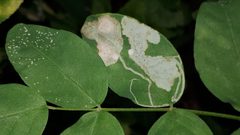
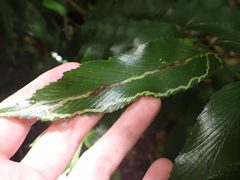
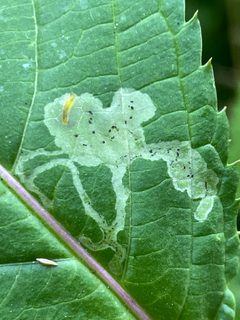
Larvae are leaf miners that feed internally on plant leaf tissue. Specific plants vary by : Phytoliriomyza felti has been observed on ferns including Pellaea atropurpurea and Asplenium species; Phytoliriomyza jacarandae is associated with Jacaranda mimosifolia.
Host Associations
- Pellaea atropurpurea - leaf mines documented
- Asplenium - leaf mines documented on multiple
- Jacaranda mimosifolia - for P. jacarandae
Behavior
females deposit into plant leaf tissue. Larvae feed as internal leaf miners, creating visible mines within leaves. The mining produces characteristic patterns visible on the leaf surface.
Ecological Role
As leaf miners, larvae contribute to herbivory pressure on plants. The specialized host associations suggest potential role in regulating host plant or serving as food source for .
Similar Taxa
- other Agromyzidae generaPhytoliriomyza is distinguished within Phytomyzinae by specific morphological characters of the male terminalia and external features detailed in -level keys
More Details
Taxonomic history
The was established by Hendel in 1931. Brazilian fauna remained poorly known until 2026, when six new were described and two new records reported, more than doubling the known Brazilian diversity.
Observation notes
Leaf mines of Phytoliriomyza felti are visible as pale trails within fern fronds and can persist on herbarium specimens and winter foliage, allowing detection outside the period.
Sources and further reading
- BugGuide
- Wikipedia
- GBIF taxonomy match
- iNaturalist taxon
- NCBI Taxonomy
- Catalogue of Life
- Botanizing at Meramec State Park, Natural Wonders Trail | Beetles In The Bush
- Phytoliriomyza jacarandae . [Distribution map].
- The Phytoliriomyza Hendel (Diptera: Agromyzidae) from Brazil: new species and a key to the Brazilian species