
Liriomyza limopsis
Lonsdale, 2017
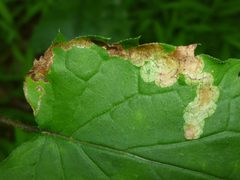
Liriomyza limopsis is a of leafminer fly in the Agromyzidae, described by Lonsdale in 2017. It belongs to a containing numerous economically important agricultural pests, though specific information about this particular species remains limited. The species name suggests a possible association with lake or pond margins (from Greek 'limne' meaning lake and 'opsis' meaning appearance or sight). Like other Liriomyza species, it likely has a larval stage that mines within leaf tissue.
Pronunciation
How to pronounce Liriomyza limopsis: /ˌlɪriˈoʊmɪzə laɪˈmɒpsɪs/
These audio files are automatically generated. While they are not always 100% accurate, they are a good starting point.
Images
Distribution
Known from Vermont, United States based on GBIF records. The was described in 2017, suggesting a relatively recent discovery with potentially limited documented range.
More Details
Taxonomic Context
Liriomyza limopsis was described by Lonsdale in 2017, making it one of the more recently described in this large and economically significant . The genus Liriomyza contains numerous leafminer species, many of which are major agricultural pests worldwide. The specific epithet 'limopsis' may indicate association with limnetic (lake or pond margin) environments, though this has not been explicitly confirmed in the literature.
Data Limitations
As a recently described with limited published research, most biological and ecological details for L. limopsis remain undocumented. The primary is housed in the Entomology Research Museum at the University of California, Riverside (UCRC ENT 235245 for the related L. conclavis, indicating similar curation practices for Lonsdale's Liriomyza descriptions).
Sources and further reading
- BugGuide
- GBIF taxonomy match
- iNaturalist taxon
- NCBI Taxonomy
- Catalogue of Life
- Liriomyza miserabilis Lonsdale dorsal | Entomology Research Museum
- Primary Type List | Entomology Research Museum
- Publications | Entomology Research Museum
- Liriomyza huidobrensis Archives - Entomology Today
- Predicting Shifts in the Range of Invasive Insect Species in the Face of Climate Change
- A Case for Preservation: Maintaining Insect Collections in Developing Countries