
Cerodontha
Rondani, 1861
Species Guides
13Cerodontha is a large of leaf-miner flies in the Agromyzidae, containing at least 280 described . Larvae feed internally on plant tissues, creating distinctive mines in leaves, stems, or leaf of grasses, sedges, and other monocots. The genus has a distribution with significant diversity in the Nearctic, Palearctic, and Australasian regions. Several species are associated with economically important crops and pasture grasses.
Pronunciation
How to pronounce Cerodontha: /ˌsɛrəˈdɒnθə/
These audio files are automatically generated. While they are not always 100% accurate, they are a good starting point.
Identification
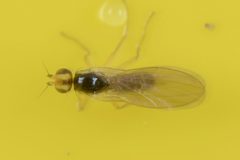
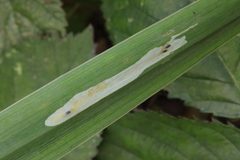
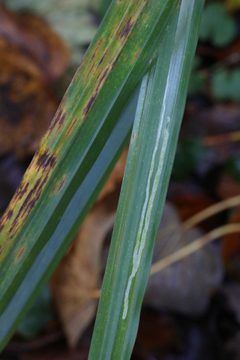
Cerodontha are small flies, typically 2–4 mm in length, with reduced wing venation characteristic of Agromyzidae. often have yellowish or grayish coloration with variable thoracic and abdominal markings. Species-level identification requires examination of male genitalia and other microscopic characters. The is distinguished from related agromyzid genera by combinations of orbital setae, facial structure, and wing patterns. Larvae create linear or blotch mines in monocot leaves, with deposited in discrete lines or scattered.
Images
Habitat
include grasslands, meadows, wetlands, agricultural fields, and gardens where plants occur. Larval development occurs within living plant tissues of grasses (Poaceae), sedges (Cyperaceae), and rushes (Juncaceae). Some inhabit bamboo stands and other monocot-dominated vegetation.
Distribution
distribution with records from North America, Europe, Asia, Australia, and New Zealand. The Nearctic fauna includes at least 10 , with six species known from Mexico. Central Europe, China (32+ species), and New Zealand harbor significant diversity. C. dorsalis occurs across the Nearctic, Palearctic, and Neotropical regions.
Seasonality
activity varies by and latitude. In temperate regions, peak activity occurs in spring and summer. C. australis in New Zealand shows highest larval numbers in late spring to early summer, with one distinct per year. Early spring records from blacklight trapping in Kansas indicate adult beginning in March–April in mid-latitude North America.
Diet
Larvae are internal feeders that mine tissues of monocotyledonous plants. Documented include grasses (Poaceae: Lolium perenne, cereals, bamboo), sedges (Cyperaceae), and rushes (Juncaceae). C. australis feeds on ryegrass and cereals. C. unisetiorbita mines bamboo leaves. may feed on nectar or honeydew, though specific adult feeding habits are poorly documented.
Host Associations
- Poaceae - larval plantGrasses including Lolium perenne ( ryegrass), cereals, and bamboo
- Cyperaceae - larval plantSedges
- Juncaceae - larval plantRushes
Life Cycle
Complete with , three larval instars, pupa, and stages. Eggs are deposited on or near plants. Larvae mine between epidermal layers of leaves or stems, feeding on mesophyll tissue. occurs within the mine or in soil. C. australis has one per year in New Zealand, with -dependent regulation typically limiting survival to one larva per tiller. Cephaloskeleton length measurements confirm three larval instars.
Behavior
Larvae are endophagous leaf miners that create serpentine or blotch mines in monocot leaves. Mining damage in C. australis can affect up to 53% of tillers in spring/summer, with extension into pseudostems in 41% of tillers by mid-summer. are attracted to light and have been documented at blacklight sheets. Generally only one larva per tiller survives to due to resource limitation or .
Ecological Role
Herbivores that function as primary consumers in grassland and wetland . Larval mining damage can reduce photosynthetic capacity of plants. Serve as hosts for including Braconidae, Eulophidae, Eupelmidae, and Diapriidae, with rates reaching high levels in summer. Contribute to nutrient cycling through plant tissue consumption and deposition.
Human Relevance
C. australis (wheat miner) is widespread in New Zealand pastures but has limited recognized economic impact despite high abundance. Some are occasional pests in cereal crops and managed grasslands. Leaf mining damage can reduce forage quality and yield in pasture grasses. The serves as a model for studies of leaf-miner , associations, and molecular identification methods in agromyzid flies.
Similar Taxa
- AgromyzaRelated agromyzid with leaf-mining larvae; distinguished by wing venation patterns, orbital setae number, and larval plant associations (Agromyza often associated with dicots)
- PhytomyzaLarger agromyzid with similar mining habits; Cerodontha typically associated with monocots while Phytomyza more commonly mines dicot leaves
- LiriomyzaAgromyzid with serpentine leaf miners; distinguished by and larval mine characteristics
More Details
Taxonomic Complexity
The contains multiple subgenera including Cerodontha (Cerodontha) and Cerodontha (Poemyza). C. dorsalis exhibits two color forms: a pale eastern form and a dark western form with geographic overlap and intermediate specimens. Mexican appears underestimated, with six known from only nine specimens total.
Molecular Identification Challenges
Accurate identification often requires integration of morphological examination with . The absence of voucher specimen sequences in public databases has historically impeded molecular , as demonstrated by studies of C. australis in New Zealand.
Sources and further reading
- BugGuide
- Wikipedia
- GBIF taxonomy match
- iNaturalist taxon
- NCBI Taxonomy
- Catalogue of Life
- Bug Eric: First Night of Blacklighting
- Bug Eric: April 2024
- Revision of Nearctic species ofCerodontha(Cerodontha) (Diptera: Agromyzidae)
- Cerodontha (Poemyza) unisetiorbita Zlobin, 1993 (Diptera: Agromyzidae), a leaf-miner on bamboo: first records from Central Europe/ Cerodontha (Poemyza) unisetiorbita Zlobin, 1993 (Diptera: Agromyzidae), vrtalka minující na bambusu: první nálezy ve střední Evropě.
- Molecular identification of Cerodontha australis (Diptera: Agromyzidae) and its associated pupal endoparasitoids (Hymenoptera)
- Seasonal biology of the wheat sheath miner Cerodontha australis (Diptera: Agromyzidae) in perennial ryegrass in Waikato, New Zealand
- Immature Stages of Agromyzidae (Diptera) from India. V. taxonomy and biology of ten species ofCerodonthaRondani*
- Three new Cerodontha species from Inner Mongolia and Qinghai with a checklist of thirty-two Chinese species (Diptera, Agromyzidae).