
Stomoxyini
Genus Guides
3- Haematobia(horn flies)
- Haematobosca
- Stomoxys(stable flies)
Stomoxyini is a tribe of biting flies within the Muscidae. Members are and of recognized medico-veterinary importance, with documented roles in transmitting to humans and livestock. The tribe includes approximately nine , notably *Stomoxys* (stable flies), *Haematobia* (horn flies), and *Haematobosca*. These flies are distributed globally but have been specifically documented as in North African Maghreb countries.
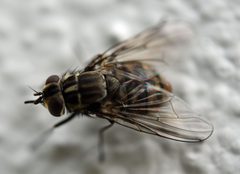
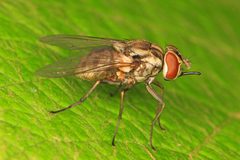
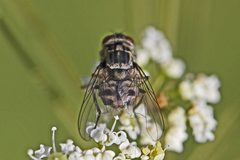
Identification
Stomoxyini can be distinguished from other Muscidae by their adapted for blood-feeding, a trait not shared with the majority of muscid flies. Within the tribe, are distinguished by antennal structure, thoracic chaetotaxy, and male genitalia . *Stomoxys* possess a distinct forward-projecting and typically show gray thoracic stripes with dark spots on the .
Images
Distribution
Global distribution with documented presence in the Maghreb region (Algeria, Morocco, Tunisia). Specific geographic ranges vary by and .
Diet
; feed on blood of mammals including livestock and humans.
Human Relevance
Medico-veterinary importance as biting pests and . Stomoxyini can transmit to humans and livestock and cause allergic reactions through their saliva. Documented as significant economic pests of cattle and other domestic animals.
Similar Taxa
- HaematopotiniAnother tribe of blood-feeding Muscidae; distinguished by morphological differences in mouthpart structure and wing venation
- Other Muscinae tribesNon- relatives lack piercing mouthparts and are not blood-feeding
More Details
Included Genera
The tribe comprises nine recognized : *Bruceomyia*, *Haematobia*, *Haematobosca*, *Neivamyia*, *Parastomoxys*, *Prostomoxys*, *Rhinomusca*, *Stomoxys*, and *Stygeromyia*.