
Eustalomyia
Kowarz, 1873
Species Guides
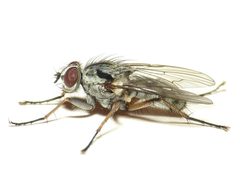
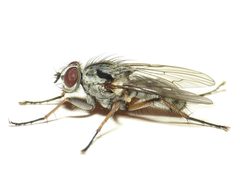
1Eustalomyia is a of root-maggot flies in the Anthomyiidae, comprising approximately five described . The genus is notable for its kleptoparasitic relationship with solitary , particularly those in the family Crabronidae. are typically found near wood harboring wasp nests, where they deposit . The larvae develop within the stored prey provisions of their .
Pronunciation
How to pronounce Eustalomyia: /juːˌstæloʊˈmaɪə/
These audio files are automatically generated. While they are not always 100% accurate, they are a good starting point.
Identification
Eustalomyia resemble house flies (Musca domestica) in general appearance but can be distinguished by slightly different abdominal markings, a spinier , and proportionally longer legs. Close examination is required for definitive identification, as they lack the conspicuous features of many other anthomyiid .
Images
Habitat
Vicinity of wood likely to harbor nests of solitary ; rotten wood. are found near the nesting sites of their rather than in the nests themselves.
Distribution
Recorded from England and Wales (south coast to Lancashire and Yorkshire), with very few records from Scotland; not recorded from Ireland. Also distributed across northern Europe, Scandinavia, North America (California to Nova Scotia), Japan, Korea, and Kamchatka.
Diet
feeding habits are not well documented; possibly feed on nectar or pollen like many other Anthomyiidae.
Host Associations
- Crabro - solitary
- Crossocerus - solitary
- Ectemnius - solitary
- Trypoxylon - solitary
- Polistes dominula - possible observed interaction with European paper wasp, though social do not store prey; mechanism unclear
Life Cycle
are deposited near or within the nests of solitary . Larvae are kleptoparasites, developing within the stored prey provisions intended for offspring. The complete developmental sequence and site have not been fully documented.
Behavior
exhibit stalking near nests, approaching slowly and then rapidly looping around nests at high speed during apparent oviposition attempts. Wasps respond with alert postures and frantic searching behavior on the nest comb following fly visits.
Ecological Role
Kleptoparasite of Hymenoptera, specifically solitary in Crabronidae. By consuming prey provisions, larvae compete directly with offspring for resources.
Human Relevance
Occasionally observed by entomologists and naturalists due to conspicuous interactions with common . No known economic or medical significance.
Similar Taxa
- Tachinidaesuperficially similar flies that also parasitize insects; distinguished by different structure, bristle patterns, and lack of association with stored prey
- Sarcophagidaesimilar size and coloration; distinguished by abdominal pattern and —paper wasps have been observed eating sarcophagids rather than being parasitized by them
- Musca domesticageneral resemblance in size and coloration; distinguished by abdominal spines, leg proportions, and markings
More Details
Host specificity uncertainty
While literature consistently reports solitary (Crabronidae) as , observations of Eustalomyia interacting with social paper wasps (Polistes dominula, Vespidae) suggest either occasional host confusion, an undescribed parasitic mechanism, or misidentification of the fly. Social wasps do not store prey, eliminating the typical kleptoparasitic . The true relationship with social wasps remains unresolved.
Genomic resources
The of Eustalomyia histrio has been sequenced, with an assembly of 871.3 Mb, 6 chromosomal pseudomolecules, and 26,785 protein-coding genes.