
Eustalomyia vittipes
(Zetterstedt, 1845)
Eustalomyia vittipes is a root-maggot fly in the Anthomyiidae. The Eustalomyia is known for kleptoparasitic associations with , though most literature documents this with solitary wasp rather than social ones. Records indicate presence in northern Europe, particularly Scandinavia and Denmark.
Pronunciation
How to pronounce Eustalomyia vittipes: /juːˌstæloʊˈmaɪə ˈvɪtɪˌpiːz/
These audio files are automatically generated. While they are not always 100% accurate, they are a good starting point.
Identification
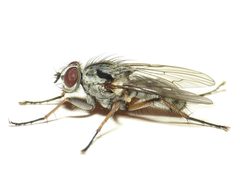
Differs from Musca domestica by spinier and longer legs; from other Anthomyiidae by leg banding (implied by name) and association with nests. Separation from Eustalomyia festiva requires examination of specific markings and leg patterns.
Images
Appearance
resemble house flies (Musca domestica) but can be distinguished by slightly different markings, a spinier , and proportionally longer legs. The specific epithet 'vittipes' (banded legs) suggests leg patterning may be a diagnostic feature.
Habitat
Associated with nesting sites, including solitary wasp nests in blocks and potentially social wasp nests. observations occur near human structures where wasps nest.
Distribution
Recorded from Denmark, Norway, and Sweden; broader European distribution likely but not fully documented.
Seasonality
observed in August in North American observations (Colorado), suggesting summer activity; European not specifically documented.
Host Associations
- Polistes dominula - Kleptoparasite (suspected)Observed stalking European paper wasp nests, though social do not store prey, making the mechanism unclear. May represent confusion or undocumented parasitic strategy.
- Solitary wasps (various) - KleptoparasiteDocumented in literature; larvae develop on flies stored in solitary nests.
Behavior
have been observed nervously and rapidly, making photography difficult. When near nests, they exhibit stalking and rapid maneuvers around nests. One observation describes a fly looping around a wasp nest at high speed, followed by agitated searching behavior from wasps.
Ecological Role
Kleptoparasite of ; larvae likely consume prey stored by wasps or possibly wasp larvae themselves. The exact mechanism with social wasps remains unclear.
Human Relevance
Occasionally observed near human dwellings where paper wasps nest. Not known as a pest or beneficial in economic terms.
Similar Taxa
- Musca domesticaSimilar size and general appearance, but lacks spinier and longer legs; not associated with nests.
- Eustalomyia festiva with similar kleptoparasitic ; distinguished by specific markings and leg patterns.
- Tachinidae (various)Similar size and sometimes markings, but tachinids are of other insects rather than kleptoparasites of prey stores.
- SarcophagidaeSome are parasitic, but sarcophagids are typically scavengers or of other ; paper wasps have been observed eating sarcophagids rather than being victimized by them.
Misconceptions
The is widely reported as kleptoparasitic only on solitary , yet observations of E. vittipes near social paper wasp nests suggest either flexibility, misidentification of , or an undocumented parasitic strategy.
More Details
Taxonomic note
Originally described as Anthomyza vittipes by Zetterstedt in 1845.
Behavioral uncertainty
The mechanism by which E. vittipes might exploit social nests is unresolved. Social wasps do not store prey, eliminating the typical kleptoparasitic . Direct of wasp larvae or exploitation of nest materials remain unverified hypotheses.