
Diclasiopa lacteipennis
(Loew, 1862)
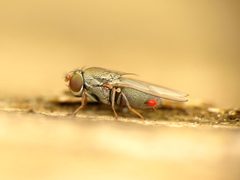
A small shore fly in the Ephydridae, Diclasiopa lacteipennis has been documented engaging in kleptoparasitic , feeding on fluids from heteropteran prey captured by predatory insects. The is in distribution, with records from Norway and Sweden. are attracted to defensive chemical secretions of stink bugs and related true bugs, using these cues to locate food sources.
Pronunciation
How to pronounce Diclasiopa lacteipennis: //daɪˌkleɪsiˈoʊpə læktiˈpɛnɪs//
These audio files are automatically generated. While they are not always 100% accurate, they are a good starting point.
Images
Distribution
; documented in Norway and Sweden.
Diet
Kleptoparasitic; feeds on fluids from prey of predatory insects, particularly heteropterans such as stink bugs (Pentatomidae).
Behavior
Engages in kleptoparasitism, congregating around predatory insects and their prey to feed on accessible fluids. Attracted to chemical components of defensive secretions produced by pentatomid and coreid .
Ecological Role
Acts as a kleptoparasite in -prey interactions, potentially influencing the foraging economics of predatory insects and serving as a -dependent signal for mate location.
Similar Taxa
- Milichiella lacteipennisFormerly confused with or synonymized under this name; the was reclassified into Diclasiopa. Both share similar kleptoparasitic and association with heteropteran prey.
- Chloropidae (Oscinellinae)Co-occurs at kleptoparasitic feeding sites on heteropteran prey; smaller and morphologically distinct but shares .