
Cryptochetum iceryae
(Williston, 1888)
cottony cushion scale parasite, cottony cushion scale parasitoid
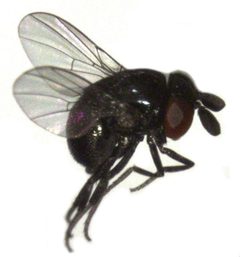
Cryptochetum iceryae is a parasitic fly in the Cryptochetidae, native to Australia. It was deliberately introduced to California in the 1880s as a agent against the cottony cushion scale (Icerya purchasi), a major pest of citrus crops. The has since been introduced to Israel and South America for similar purposes. In 2019, it was discovered in the United Kingdom for the first time, identified in the wildlife garden at the Natural History Museum in London.
Pronunciation
How to pronounce Cryptochetum iceryae: //ˌkɹɪp.toʊˈkiː.təm ˌaɪ.sɪˈɹaɪ.iː//
These audio files are automatically generated. While they are not always 100% accurate, they are a good starting point.
Images
Distribution
Native to Australia. Introduced to California, USA in the 1880s; subsequently established in Israel and South America. First recorded in the United Kingdom in 2019 (Natural History Museum wildlife garden, London).
Host Associations
- Icerya purchasi - Primary ; larval development occurs within cottony cushion scale bodies
Behavior
Females deposit one to four inside second-instar, third-instar, or female cottony cushion scales. Larvae hatch and feed within the body, eventually killing it.
Ecological Role
agent; of cottony cushion scale, a significant agricultural pest of citrus and other crops.
Human Relevance
Used in programs against cottony cushion scale since the 1880s. Part of one of the most successful documented cases of , alongside the vedalia beetle (Rodolia cardinalis).
Similar Taxa
- Rodolia cardinalisBoth are agents of cottony cushion scale; Cryptochetum is a fly, Rodolia is a predatory
- Other Cryptochetidae members share endoparasitoid lifestyle within scale insects, but specificity and geographic distribution differ