
Plagioneurus univittatus
Loew, 1857
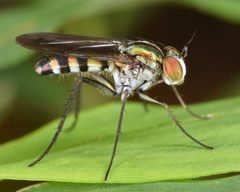
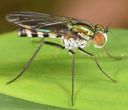
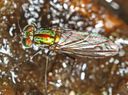
Plagioneurus univittatus is a of long-legged fly in the Dolichopodidae. It is the sole member of the Plagioneurus and the only species in the Plagioneurinae. The species was described by Loew in 1857. It is distinguished from all other dolichopodid flies by its unique subfamily-level classification.
Pronunciation
How to pronounce Plagioneurus univittatus: /plæˌdʒiːoʊˈnɪərəs ˌjuːnɪˈvɪtətəs/
These audio files are automatically generated. While they are not always 100% accurate, they are a good starting point.
Identification
The only member of Plagioneurinae; distinguished from other Dolichopodidae by this unique phylogenetic placement. Specific diagnostic morphological features are not documented in available sources.
Images
Distribution
Distribution records exist for Brazil (Distrito Federal).
Misconceptions
The name "univittatus" has been used for mosquito (Culex univittatus), which has led to confusion in popular and scientific literature. Plagioneurus univittatus is a dolichopodid fly, not a mosquito, and is not involved in transmission.
More Details
Taxonomic Uniqueness
Plagioneurus univittatus is the sole representative of the Plagioneurinae, making it phylogenetically isolated within Dolichopodidae.
Nomenclatural Note
The specific epithet "univittatus" (meaning "one-banded" or "single-striped") is shared with mosquito , but this reflects independent naming based on similar markings rather than relatedness.