
Liancalus
Loew, 1857
Species Guides
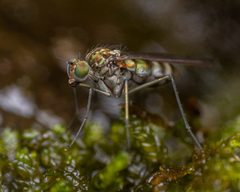
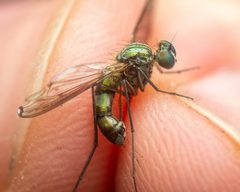
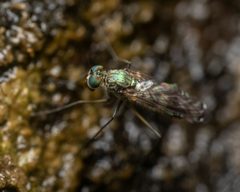
5Liancalus is a of long-legged flies (Dolichopodidae) containing at least 21 distributed worldwide except Australasia and Oceania. The genus includes some of the largest members of the , with body lengths approaching 12 mm. Species in this genus are predatory and associated with moist , including running on water surfaces. The genus name was established by Loew in 1857 as a replacement for the preoccupied Anoplomerus, with nomenclatural stability secured by an ICZN ruling in 2018.
Pronunciation
How to pronounce Liancalus: //liˈæŋ.kə.ləs//
These audio files are automatically generated. While they are not always 100% accurate, they are a good starting point.
Identification
Liancalus are distinguished from other Dolichopodidae by their large size (up to 12 mm), among the largest in the . They possess the characteristic long legs and metallic coloration typical of dolichopodids. Species-level identification requires examination of male genitalia, particularly the claspers and other terminal appendages. The is distinguished from the similar genus Scellus by differences in male genitalia structure and historical type species designations.
Images
Habitat
Associated with moist environments including puddles, intermittent streams, lake shores, and . are capable of running on water surfaces.
Distribution
Worldwide distribution except Australasia and Oceania. Records confirmed from Denmark (DK), Norway (NO), and Sweden (SE).
Diet
Predatory on other small insects. have been observed preying on mosquito larvae at the water surface.
Behavior
run up and down vertical surfaces and skate across water surfaces, behaving similarly to water striders. Males possess modified front adorned with special used in complex to females. Adults are agile and rarely stop moving, making them difficult to observe or photograph.
Ecological Role
in aquatic and semi-aquatic , potentially contributing to regulation of mosquito through on larvae.
Human Relevance
Potential value as agents for mosquitoes. The includes that are among the largest and most conspicuous long-legged flies, making them notable subjects for entomological observation and photography, though their constant movement presents challenges for documentation.
Similar Taxa
- ScellusHistorically threatened to be synonymized with Liancalus due to an overlooked corrigendum changing the type of Anoplomerus; distinguished by different male genitalia and type species designations
- HydrophorusAlso skates on water surfaces and shares semi-aquatic habits; Liancalus is generally larger and differs in genitalia structure
- DolichopusShorter-legged also found on water surfaces; Liancalus are larger and have proportionally longer legs