
Wyeomyia smithii
(Coquillett, 1901)
Pitcher-plant Mosquito, Pitcher Plant Mosquito
is a specialized mosquito that completes its entire pre- development within the water-filled pitchers of the purple pitcher plant, Sarracenia purpurea. It is a top in this unique microecosystem, where its presence directly influences bacterial . The exhibits remarkable geographic variation in blood-feeding : northern are entirely non-biting, while some southern populations may blood-feed after producing an initial batch. W. smithii has become a model organism for studying and rapid evolutionary response to climate change, with documented shifts in critical over recent decades.
Pronunciation
How to pronounce Wyeomyia smithii: /waɪˈoʊmiə ˈsmɪθi/
These audio files are automatically generated. While they are not always 100% accurate, they are a good starting point.
Identification
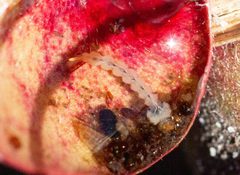
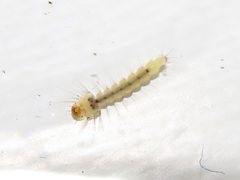
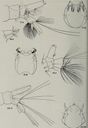
Identification relies on association with the plant Sarracenia purpurea, as this is an obligate of pitcher plant phytotelmata. are small mosquitoes typical of the Wyeomyia. Larvae are found exclusively in pitcher plant fluid and can be distinguished from other pitcher plant inhabitants by their mosquito and predatory . The species is not known to approach humans or livestock, which separates it from pest mosquitoes in sympatric regions.
Images
Habitat
Obligate inhabitant of the phytotelma (water-filled cavity) of the purple pitcher plant, Sarracenia purpurea. The pitcher fluid provides the sole aquatic environment for larval development. The microhabitat contains a consistent of bacteria, rotifers, protozoa, and .
Distribution
Eastern North America, ranging from the southeastern United States through Canada. Documented from Massachusetts bogs, Minnesota (Itasca State Park area), and across a latitudinal gradient from 30 to 50 degrees north latitude. GBIF records indicate presence in Caribbean and North America including Vermont.
Seasonality
females oviposit in late spring or early fall. Larvae progress through five instars over approximately 20–22 days under favorable conditions. Third instar larvae enter to overwinter; a second diapause in the fourth instar occurs in spring and fall but these individuals do not survive winter. Seasonal activity is regulated by , with critical photoperiod varying by latitude.
Diet
Larvae feed on bacteria, micro-animals including rotifers and protozoa, and decaying insects captured by the pitcher plant. They are the top in the pitcher plant microcommunity. of northern do not blood-feed; southern populations may blood-feed after initial oviposition to support a second batch.
Host Associations
- Sarracenia purpurea - obligate developmental Purple pitcher plant; sole for pre- development
- Smittium culisetae - fungal endosymbiontFungal with temporal distribution patterns in wild
Life Cycle
are laid in pitcher plant fluid and hatch in 1–8 days. Larvae pass through five instars, with the fifth instar lasting about 20–22 days before . occurs as diapausing third-instar larvae. A facultative second can occur in the fourth instar but is not winter-survivable. Adults emerge to mate, with females producing fertilized eggs within two days of sexual maturity.
Behavior
Enters larval initiated and maintained by short day lengths, terminated by long day lengths. Photoperiodic response is indefinitely sensitive, allowing experimental manipulation over weeks or months. The critical for diapause initiation has shifted toward shorter day lengths over recent decades, demonstrating microevolutionary response to climate warming. Females select younger pitcher plants for oviposition.
Ecological Role
Top in the pitcher plant microcommunity; presence determines bacterial within individual pitchers. Contributes to nutrient cycling in the pitcher . The mosquito-plant relationship is mutualistic: larvae prey on organisms that might otherwise overwhelm the pitcher ecosystem, and dead mosquitoes provide nutrients to the plant.
Human Relevance
Not a pest ; does not bite humans or approach livestock in northern . Southern populations show minimal blood-feeding tendency. Significant scientific importance as a model organism for studying , regulation, and rapid evolutionary to climate change. Documented genetic shifts in photoperiodic response provide evidence of evolution occurring on observable timescales.
Similar Taxa
- Other Wyeomyia species members share small size and phytotelmata associations, but W. smithii is distinguished by obligate specialization on Sarracenia purpurea and unique geographic variation in blood-feeding
- Aedes albopictusBoth studied for photoperiodic and climate , but Aedes albopictus is a and human pest with very different associations and blood-feeding
More Details
Climate Change Response
From 1972 to 1996, the critical for between 30–50°N latitude decreased by several minutes, allowing later seasonal entry. This represents one of the fastest documented cases of microevolution in response to climate change.
Laboratory Colonization
First successful laboratory rearing independent of pitcher plants was achieved in 1957 using larvae from Minnesota, enabling detailed biological studies previously impossible due to the ' obligate natural association.
Genetic Architecture
QTL mapping has identified sex-linked and epistatic loci controlling critical and stage of , with one region containing genes for photoperiodic response, diapause stage, and hormonal regulation of development.
Sources and further reading
- BugGuide
- Wikipedia
- GBIF taxonomy match
- iNaturalist taxon
- NCBI Taxonomy
- Grasshoppers of Colorado
- Grasshoppers of Colorado
- Bembicid Holdings | Entomology Research Museum
- Grasshopper Collections and Survey
- When Mosquitoes Go to Bed for Winter, and How It Can Inform Management
- Another autumn oedipodine | Beetles In The Bush
- Faculty Opinions recommendation of Reproductive value in a complex life cycle: heat tolerance of the pitcher-plant mosquito, Wyeomyia smithii.
- Notes on the Biology and Laboratory Colonization of Wyeomyia smithii (Coquillett) (Diptera: Culicidae)
- Temporal distribution of Smittium culisetae in a wild population of Wyeomyia smithii from pitcher plants
- A second diapause in Wyeomyia smithii: seasonal incidence and maintenance by photoperiod
- Quantitative Trait Loci Associated with Photoperiodic Response and Stage of Diapause in the Pitcher-Plant Mosquito,Wyeomyia smithii