
Wyeomyia
Theobald, 1901
Species Guides
4- Wyeomyia haynei
- Wyeomyia mitchellii(bromeliad mosquito)
- Wyeomyia smithii(Pitcher-plant Mosquito)
- Wyeomyia vanduzeei(Bromeliad Mosquito)
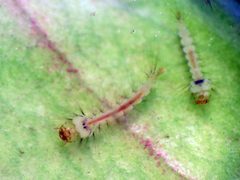
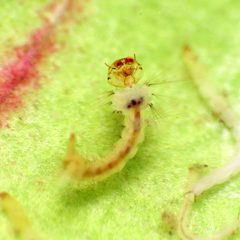
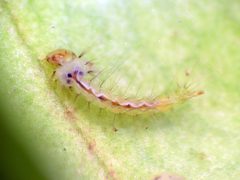
Wyeomyia is a of neotropical mosquitoes comprising approximately 140 , first described by Frederick Vincent Theobald in 1901. The genus is taxonomically challenging due to high and incomplete delineation. are and primarily forest-dwelling, with larvae developing in phytotelmata—water held by plants such as bromeliads, aroids, and pitcher plants. Most species feed on blood and will bite humans, though they are not confirmed of human .
Pronunciation
How to pronounce Wyeomyia: //ˌwaɪiˈoʊmɪə//
These audio files are automatically generated. While they are not always 100% accurate, they are a good starting point.
Identification
Distinguished from other New World Sabethini by scutal coloration (bronzy to metallic gold versus patterns in Limatus and Sabethes). Definitive -level identification requires specialized taxonomic expertise due to high intrageneric diversity and incomplete species delineation.
Images
Appearance
resemble mosquitoes of the Limatus and Sabethes but are distinguished by scutal coloration ranging from dull bronzy with slight metallic sheen to metallic gold. Specific morphological characters vary considerably across the 140+ , contributing to taxonomic difficulty.
Habitat
Predominantly forest with damp conditions. Larval development occurs in phytotelmata: water collections in bromeliad leaf axils, aroids, flower bracts, broken bamboo and bamboo stumps, tree holes, pitcher plants, and occasionally artificial containers.
Distribution
Primarily neotropical, ranging across the Caribbean into Florida, with Wyeomyia smithii extending into eastern North America (documented from Vermont).
Seasonality
are active during the day. Wyeomyia smithii exhibits -induced ; critical photoperiod for diapause initiation varies with latitude and has shifted in response to climate change (observed decrease of several minutes between 1972–1996 for between 30–50°N).
Diet
Larvae feed on organic matter in water, including decomposing carcasses of insects and spiders. : most take blood meals; females readily feed on humans. Some larvae obtain oxygen directly from water and rarely surface.
Life Cycle
laid in phytotelmata (bromeliad leaf axils, pitcher plants, tree holes, etc.). Larvae develop in these small water collections. Some obtain oxygen directly from water without surfacing. occurs within the larval .
Behavior
activity. usually remain near larval . Some occupy characteristic elevations in forest ; others restricted to ground level. Females use visual cues (bromeliad form and color) to select oviposition sites.
Ecological Role
Decomposer in larval stage (consumes detritus and carcasses in phytotelmata). Contributes to nutrient cycling in forest phytotelm . females function as blood-feeders, potentially linking vertebrate to .
Human Relevance
Females bite humans entering forest . Ilhéus virus, virus, and Maguari virus have been isolated from Wyeomyia mosquitoes, but the is not known to transmit agents to humans. Wyeomyia smithii serves as a research model for studying rapid evolutionary response to climate change, specifically shifts in critical for .
Similar Taxa
- Limatus similar; distinguished by Wyeomyia's characteristic scutal coloration (bronzy to metallic gold)
- Sabethes similar within tribe Sabethini; Wyeomyia differs in scutal coloration and pattern
More Details
Taxonomic Complexity
The contains approximately 140 across 15+ subgenera, but species boundaries remain poorly resolved and additional taxonomic work is needed.
Climate Change Research
Wyeomyia smithii is among the few mosquito with documented shifts in critical for in response to climate warming, making it a key study organism for understanding rapid evolutionary .