
Cricotopus
Wulp, 1874
non-biting midges
Species Guides
3- Cricotopus bicinctus
- Cricotopus lebetis(Hydrilla Tip Mining Midge)
- Cricotopus sylvestris
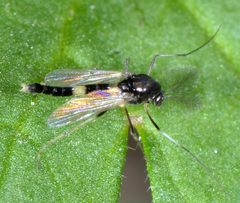
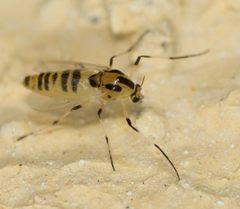
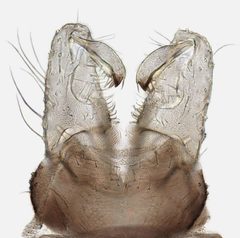
Cricotopus is a large and diverse of non-biting midges in the Chironomidae, Orthocladiinae. occupy a wide range of freshwater and estuarine globally, from pristine glacial streams to degraded urban waterways. Some species are specialized stem miners of aquatic plants, including C. lebetis which targets hydrilla. The genus includes species with documented mutualistic relationships with cyanobacteria (Nostoc), as well as species used in biomonitoring and ecotoxicological research.
Pronunciation
How to pronounce Cricotopus: //krɪˈkoʊtəpəs//
These audio files are automatically generated. While they are not always 100% accurate, they are a good starting point.
Images
Habitat
Freshwater lotic and lentic environments including streams, rivers, estuaries, and man-made drainages. Some are rheophilic, inhabiting glacial streams; others occur in shallow estuarine coves or degraded urban waterways. C. sylvestris is associated with submerged aquatic vegetation (Myriophyllum spicatum) in estuarine settings. C. lebetis is specifically associated with beds of hydrilla (Hydrilla verticillata).
Distribution
Globally distributed and highly diverse. Documented from: Nearctic arctic zone (14 , 11 Holarctic, 7 arctic-restricted), including circumboreal C. bicinctus and C. sylvestris; southeast Queensland, Australia; New Zealand (North Island); Italian and French Maritime Alps (glacial streams); Florida, USA; Hudson River estuary; British Columbia, Canada; Belgium, Denmark, Norway, Sweden, Colombia.
Seasonality
C. myriophylli: with late May to mid-September in British Columbia; first-instar larvae mid-June to mid-August. C. draysoni: dramatic seasonal differences in between 'Start wet' (October-January) and 'End wet' (April-May) periods in Australia, associated with rainfall-driven water level changes. C. sylvestris: field development estimated at 42 days; laboratory development 10 days at 22-29°C, 28 days at 15°C.
Host Associations
- Hydrilla verticillata - larval feeding on meristematic tissues; stem mining C. lebetis specifically
- Myriophyllum spicatum - association; larval substrateC. sylvestris predominant on this plant in Hudson River estuary
- Nostoc parmelioides - mutualismdocumented for Cricotopus ; cyanobacterial
Life Cycle
Complete with , four larval instars, pupal, and stages. C. myriophylli: , overwinters primarily in third instar (also second and fourth instars recovered), no true . C. sylvestris: rapid development under warm conditions. Sex ratio in C. myriophylli approximately 2:1 males to females. Emerged adult estimated at 34% of produced larval biomass in C. sylvestris.
Behavior
Larval stem mining: C. lebetis larvae mine meristematic tissues of hydrilla tips, disrupting shoot growth and preventing stems from reaching the water surface. Some exhibit mutualistic with cyanobacteria (Nostoc). Wide ecological tolerances allow occupation of ranging from pristine to highly degraded.
Ecological Role
Important secondary production in aquatic ; C. sylvestris accounted for 31% of total production and 60% of production associated with Myriophyllum in a Hudson River estuary cove. Prey for naiads, other , and fish. Used in biomonitoring: C. draysoni employed in ecotoxicogenomic research for detecting sublethal pollution effects through biomarkers. Potential agent: C. lebetis investigated for hydrilla management. Some considered indicators of climate change in glacial stream systems.
Human Relevance
Biomonitoring and ecotoxicology: C. draysoni used as model organism for detecting health impacts through transcriptomic analysis of detoxification genes. : C. lebetis investigated as agent for hydrilla (Hydrilla verticillata) management in Florida, with field specificity studies conducted to assess non-target risks.
Sources and further reading
- BugGuide
- Wikipedia
- GBIF taxonomy match
- iNaturalist taxon
- NCBI Taxonomy
- Catalogue of Life
- Field host specificity of a potential hydrilla biological control agent,Cricotopus lebetisSublette (Diptera: Chironomidae)
- Differential gene expression of Australian Cricotopus draysoni (Diptera: Chironomidae) populations reveals seasonal association in detoxification gene regulation
- Hydrilla Tip Mining Midge: Cricotopus lebetis Sublette (Insecta: Diptera: Chironomidae)
- LIFE HISTORY OF CRICOTOPUS MYRIOPHYLLI OLIVER (DIPTERA: CHIRONOMIDAE) IN THE OKANAGAN VALLEY, BRITISH COLUMBIA
- Production ecology of Cricotopus sylvestris (Fabricius) (Diptera: Chironomidae) in a shallow estuarine cove
- REVIEW OF CRICOTOPUS (DIPTERA: CHIRONOMIDAE) OF THE NEARCTIC ARCTIC ZONE WITH DESCRIPTION OF TWO NEW SPECIES
- Production ecology of Cricotopus sylvestris (Fabricius) (Diptera: Chironomidae) in a shallow estuarine cove
- Behaviors of the midge, Cricotopus (Diptera: Chironomidae) related to Mutualism with Nostocparmelioides (Cyanobacteria)
- Cricotopus (s. str.) latellai sp. n., a new rheophilic species of the tremulus-group from the Italian and French Maritime Alps (Diptera: Chironomidae)
- The Diversity of Chironomidae Associated with Hydrilla in Florida, with Special Reference toCricotopus lebetis(Diptera: Chironomidae)
- Additions to the Chironomidae (Diptera: Insecta) of New Zealand: Cricotopus van der Wulp species from a North Island stream