
Bezzia nobilis
(Winnertz, 1852)
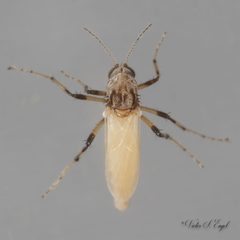
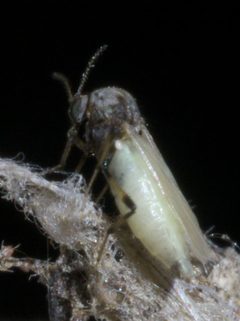
Bezzia nobilis is a biting midge in the Ceratopogonidae, widely considered one of the most common in the Bezzia. It has a notably broad geographic distribution spanning Eurasia, North America, Central America, and South America. are distinguished by black and yellow banded legs, while larvae and pupae have characteristic coloration and morphological features. The species is predatory, with larvae feeding on immobile prey including dead insects, bacteria, and protozoa.
Pronunciation
How to pronounce Bezzia nobilis: /ˈbɛtsiə ˈnoʊbɪlɪs/
These audio files are automatically generated. While they are not always 100% accurate, they are a good starting point.
Identification
are readily identified by the distinctive black and yellow striped legs—thick alternating bands on femoral and tibial bases and apices. This pattern separates B. nobilis from most other Bezzia . Pupae are recognized by brown coloration, abdominal spines, and respiratory horns. Larvae are distinguished by the combination of brown tapered and white bodies with paired setae on the terminal segment.
Images
Habitat
Strongly associated with aquatic environments. Larvae inhabit sandy and muddy substrates, particularly areas with at edges of shallow water bodies. In Europe, found in sand or sand-silt surrounding lakes and in stagnant pools in woody areas. In the southern United States, occurs in marshes including Everglades National Park. have been observed mating in brackish water.
Distribution
Eurasia (Europe and Asia), United States, Central America, and South America (including Brazil and Uruguay). One of the most broadly distributed Bezzia . Specific distribution records include Brazil (Rio Grande do Sul), Denmark, Norway, and Sweden.
Diet
Predatory. Larvae feed on immobile, easy prey including dead flies, bacteria, and protozoa. They have been observed to burrow into dead insects, forming food boluses through rhythmic movements and mandibular processing. Experiments indicate larvae fail to successfully prey on active mosquito larvae and do not reach when fed solely on larval prey. The brine fly Ephydra thermophylla has been documented as prey in hot spring .
Life Cycle
Holometabolous with , larva, pupa, and stages. Detailed duration and are unknown. Larvae approximately 7 mm; pupae 3.5–4.0 mm. Specific mating habits and oviposition are poorly documented, though adults have been observed mating in brackish water.
Behavior
Larvae exhibit distinctive feeding : burrowing into dead insects, moving side-to-side rhythmically, then using to form boluses before ingestion. Larvae show low aggression toward active prey, abandoning attempts when prey resists. mate in brackish water.
Ecological Role
Predatory whose larvae contribute to decomposition and nutrient cycling through consumption of dead insects and microorganisms. In hot spring , preys on brine flies. May serve as prey for larger aquatic and terrestrial , though specific relationships are undocumented.
Human Relevance
Not known to be a significant pest or . The ' preference for immobile prey suggests limited capacity for active biting of humans. No documented economic importance.
Similar Taxa
- Bezzia sp. nr. expolitaA closely related that successfully preys on active mosquito larvae, unlike B. nobilis which abandons such attempts.
More Details
Reproductive anatomy
Females possess two asymmetrical spermathecae chambers for sperm storage, accessible through a short passage. Males have short, stout, arched adeagi tapering to a blunt dististyle, and yellow .
Research limitations
specifics, mating habits, and detailed male remain poorly documented compared to many other Diptera .
Sources and further reading
- BugGuide
- Wikipedia
- GBIF taxonomy match
- iNaturalist taxon
- NCBI Taxonomy
- Catalogue of Life
- Where is the Noble False Widow settling next? | Blog
- Seven new species of whitefish described in Central Switzerland
- Northern Ireland, invertebrate finds in review 2023 - Buglife Blog - Buglife
- Lanternflies: vandals in vineyards, beauties in Borneo — Bug of the Week