Orfelia fultoni
(Fisher, 1940)
Foxfire Fly, dismalites
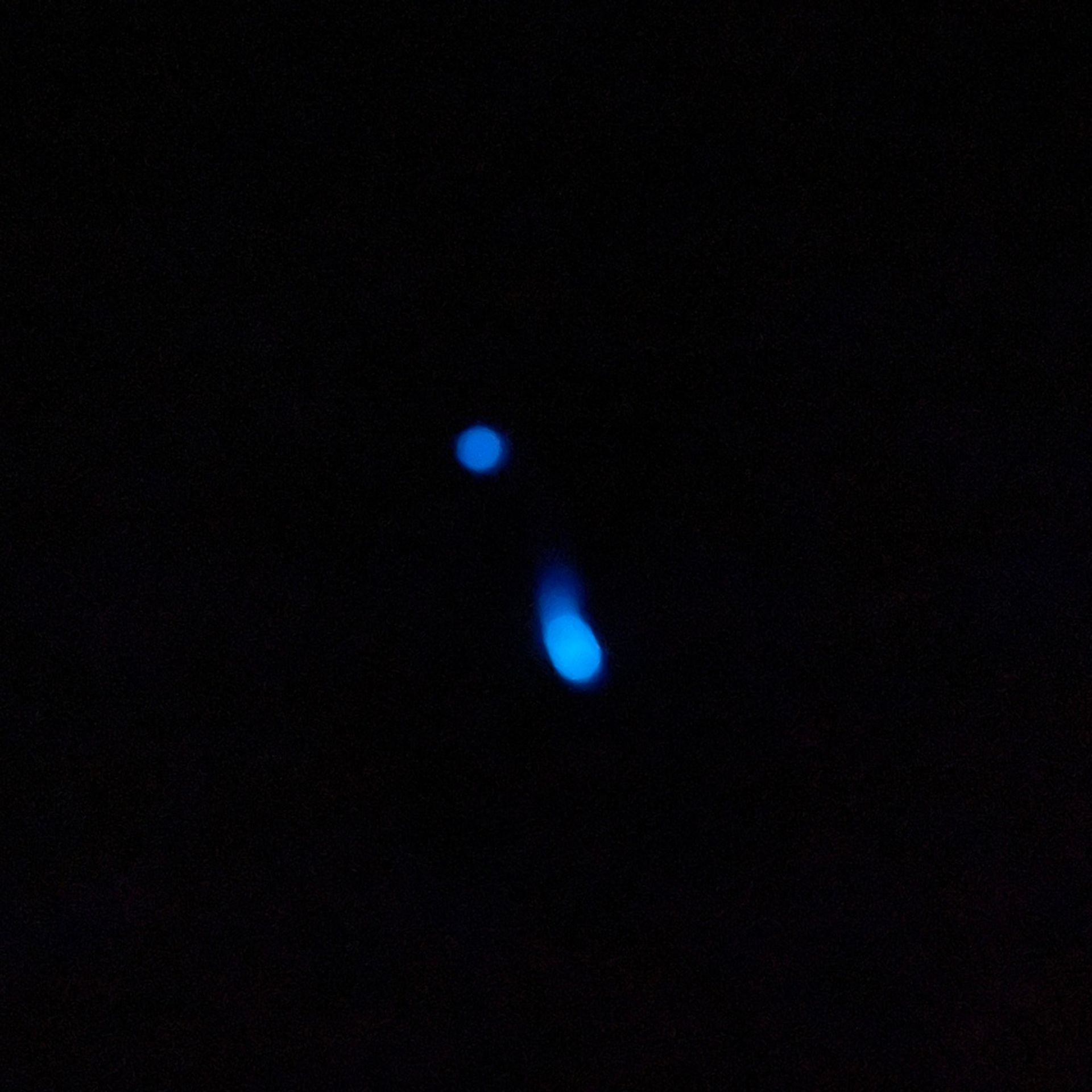
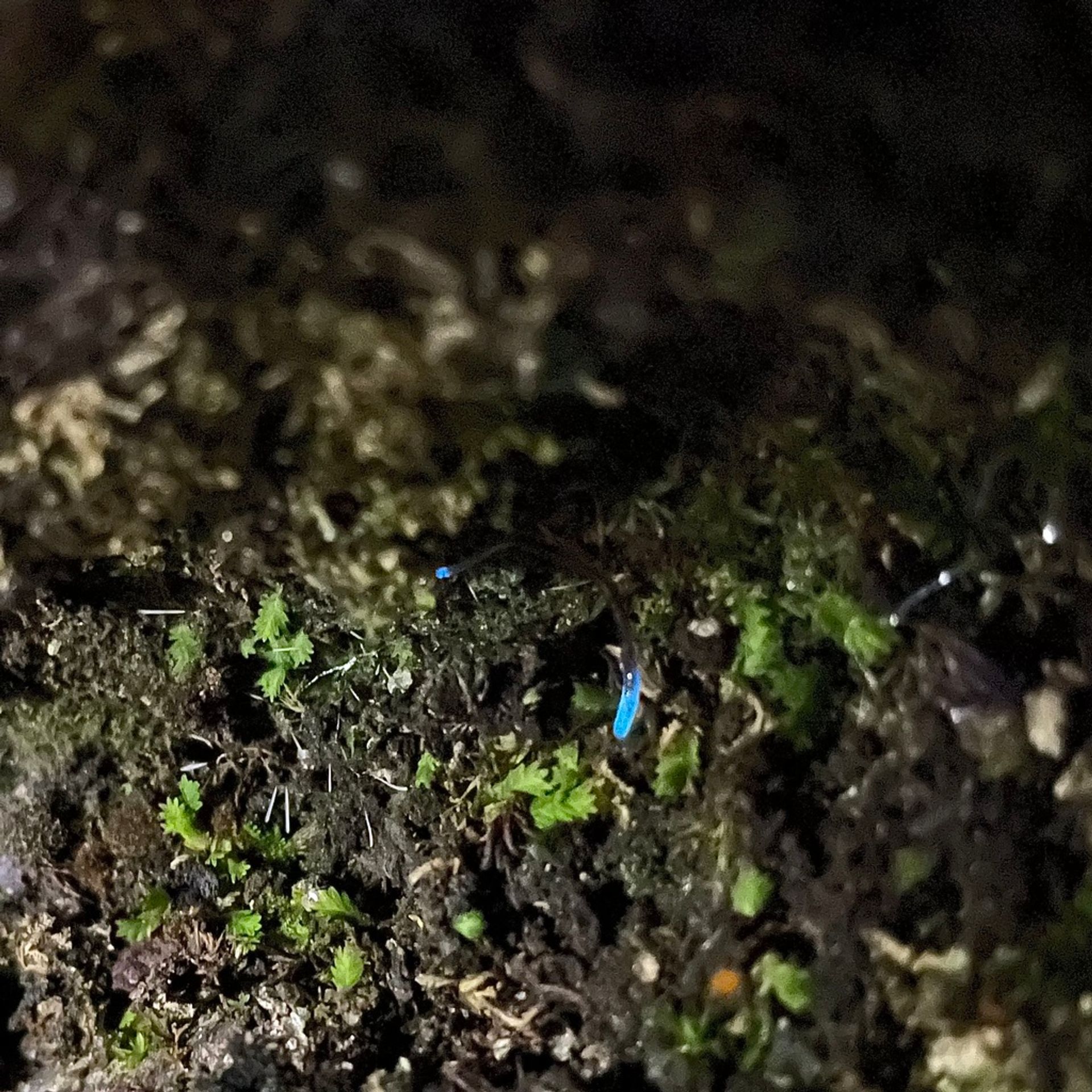
Orfelia fultoni is the only bioluminescent fly known from North America. The larvae, commonly called 'dismalites' or 'glowworms,' produce the bluest light (~460 nm) of any studied bioluminescent insect. Larvae are that construct sticky webs along stream banks and in caves, using paired bioluminescent lanterns to lure flying prey. are non-feeding and short-lived. The species was discovered in 1940 near Glenville, North Carolina by B.B. Fulton and described by Elizabeth Gault Fisher.

Pronunciation
How to pronounce Orfelia fultoni: //ɔːrˈfiːliə ˈfʌltənaɪ//
These audio files are automatically generated. While they are not always 100% accurate, they are a good starting point.
Identification
Larvae are distinguished from other Keroplatidae by their paired and bioluminescent lanterns (versus single caudal lantern in Arachnocampa). The brilliant blue emission (~460 nm) is unique among North American insects. may be distinguished from related fungus gnats by association with larval and geographic range, though specific diagnostic features for adult identification are not well documented.
Images
Habitat
Larvae inhabit dark, moist microhabitats along stream banks and in wet sandstone caves. Specific requirements include: moss-covered rock surfaces, rotten wood, cracks between rocks, or bare soil in sheltered locations; high humidity; still air that does not disturb webs; and darkness that allows to function as a prey attractant. are found in the vicinity of larval .
Distribution
to the Appalachian Mountains and Cumberland Plateau of the eastern United States. Documented from Alabama, Georgia, North Carolina, Tennessee, and Virginia. The largest known occurs at Dismals Canyon, Alabama.
Seasonality
In Alabama, two peak larval activity periods occur: late April through May (spring peak), and late September through early October (fall peak). Larvae are visible in smaller numbers year-round. likely emerge during warmer months, though specific adult periods are not well documented.
Diet
Larvae are exclusively , feeding on flying insects captured in their webs. Documented prey includes , mayflies, , and occasionally . Prey is paralyzed by chemicals in the web threads. Adults do not feed.
Life Cycle
Four-stage : (1) are sticky brown spheres deposited on walls, overhangs, and cave ceilings; hatch in 7–9 days. (2) Larval stage lasts 6–9 months depending on food availability; this is the only feeding stage and the only stage with . Larvae can survive extended periods without food. (3) Pupal stage: larvae construct protective barriers using sticky threads, hang centrally, and encase themselves in pupal skin; lasts approximately two weeks. (4) stage: males locate and attend female pupae, mate immediately upon female , then die; females lay up to 130 eggs shortly after mating, then die.
Behavior
Larvae are nocturnally active, retreating to crevices during daylight. At night, they emerge onto their webs and emit to attract prey. The bioluminescent system involves a luciferase , a unique luciferin ('keroplatin'), and a substrate-binding fraction associated with . Some males reportedly align their wings with gaps in foliage or chew holes in leaves to reduce acoustic interference and intensify their call.
Ecological Role
of small flying insects in moist, dark of the Appalachian region. The bioluminescent prey-luring system represents a distinct evolutionary solution compared to the convergently evolved system in Australasian Arachnocampa.
Human Relevance
Subject of ecotourism at Dismals Canyon, Alabama, where guided evening tours allow visitors to observe larval . Scientific interest due to unique biochemical properties of its bioluminescent system, which produces the bluest light known among insects and involves a novel luciferin-luciferase mechanism distinct from other bioluminescent organisms.
Similar Taxa
- Arachnocampa spp.Convergently evolved bioluminescent larvae that also use light to lure prey on webs, but restricted to New Zealand and Australia; uses single caudal lantern rather than paired / lanterns; biochemically distinct bioluminescent system.
- Keroplatus spp.Related keroplatid larvae that are bioluminescent but sporofagous (feed on fungi) rather than ; occupy different .
More Details
Bioluminescence biochemistry
The bioluminescent system of O. fultoni involves a 220 kDa luciferase trimer with optimum pH 7.8, a highly polar luciferin, and a substrate-binding fraction that releases luciferin in the presence of mild reducing agents. The luciferin and substrate-binding fraction are widespread in both and non-luminescent Keroplatinae larvae, suggesting additional biological functions beyond prey attraction.
Discovery history
Discovered in 1940 by B.B. Fulton near Glenville, North Carolina. Initial attempts to rear larvae failed due to heat exposure; successful rearing required cool, moist conditions. Originally described as Platyura fultoni by Elizabeth Gault Fisher in 1940.
Etymology
The 'dismalites' derives from Dismals Canyon, Alabama, site of the largest known . 'Foxfire Fly' refers to the blue bioluminescent glow of larvae.
Sources and further reading
- BugGuide
- Wikipedia
- GBIF taxonomy match
- iNaturalist taxon
- NCBI Taxonomy
- Catalogue of Life
- Bug Eric: Tree Cricket Courtship
- fungus gnat | Blog
- Diptera | Blog - Part 2
- biodiversity | Blog - Part 44
- Author Correction: A new brilliantly blue-emitting luciferin-luciferase system from Orfelia fultoni and Keroplatinae (Diptera).
- A new brilliantly blue-emitting luciferin-luciferase system from Orfelia fultoni and Keroplatinae (Diptera).