
Rhopalomyia anthophila
(Osten Sacken, 1869)
Downy Flower Gall Midge
Rhopalomyia anthophila is a gall midge in the Cecidomyiidae that induces distinctive galls on the capitulum (flower ) of Solidago altissima (tall goldenrod). The species is distributed across much of North America. The gall's modified flower structure provides a protected chamber for larval development.
Pronunciation
How to pronounce Rhopalomyia anthophila: /roʊˌfæloʊˈmaɪə ænˈθɒfɪlə/
These audio files are automatically generated. While they are not always 100% accurate, they are a good starting point.
Identification
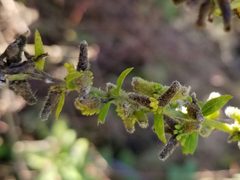
The downy flower gall on Solidago altissima is diagnostic for this . The cylindrical, hairy gall with a green color and basal position among normal capitula distinguishes it from other Rhopalomyia species that induce different gall morphologies on goldenrods. The gall contains a single larval chamber with a conical inner structure. Similar goldenrod gall midges include Rhopalomyia solidaginis (which induces elliptical stem galls) and other species producing rosette or bunch galls; these differ markedly in gall location and structure.
Images
Appearance
are small, delicate flies typical of gall midges, with long, slender and reduced wing venation. The gall induced by this is cylindrical, measuring 5–10 mm in length and 2–3.5 mm in width, slightly wider at the base than at the tip. The gall surface is covered with short, white hairs giving a fuzzy (downy) appearance. The gall is green in color and situated among normal flower .
Habitat
Associated with Solidago altissima in open including meadows, prairies, roadsides, and disturbed areas where this goldenrod occurs. The specific microhabitat is the developing flower of the plant.
Distribution
North America, occurring across much of the range of its plant Solidago altissima. The has been documented from multiple regions where tall goldenrod is present.
Seasonality
Galls become apparent in mid-August. occurs in late August to mid-September. timing has not been explicitly documented but presumably follows pupation.
Host Associations
- Solidago altissima - induces gall on capitulumModified flower serves as larval
Life Cycle
The larva develops within a single chamber inside the gall. The inner chamber is conical, with the larva initially facing downward. Before , the larva reorients to upward. The gall contains one larva per chamber. Pupation occurs within the gall in late August to mid-September.
Behavior
Females induce gall formation on developing capitula of Solidago altissima. The gall develops among normal flower and is accompanied by tiny leaves and/or ray florets at its base. The larva undergoes a behavioral reorientation from downward-facing to upward-facing before .
Ecological Role
As a gall inducer, this modifies plant tissue to create a protected microhabitat for its offspring. The galls represent a form of plant-animal interaction that may influence resource allocation in the host plant and provide potential food or shelter for other organisms, though specific ecological relationships have not been documented.
Human Relevance
The has been used in ecological studies of plant-insect interactions and gall midge . No direct economic importance to agriculture or forestry has been documented.
Similar Taxa
- Rhopalomyia solidaginisAlso induces galls on Solidago, but produces elliptical stem galls rather than cylindrical flower galls
- Asteromyia spp.Other cecidomyiids inducing galls on Asteraceae; gall and specificity differ
More Details
Gall morphology
The gall represents a modified capitulum with a single chamber and conical inner structure. The presence of tiny leaves and/or ray florets at the gall base indicates partial retention of floral structures despite the dramatic tissue modification.