
Oligotrophus
Latreille, 1804
Species Guides
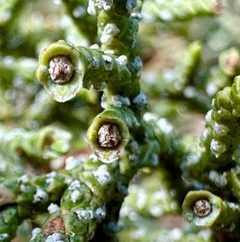
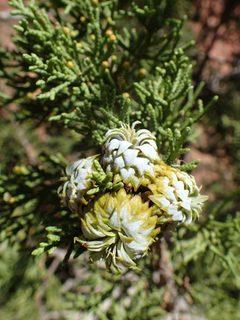
1- Oligotrophus betheli(Juniper Tip Midge)
Oligotrophus is a of gall midges (Cecidomyiidae: Diptera) established by Latreille in 1804. are gall-forming insects that induce abnormal plant growths on various plants, with documented associations to birch (Betulaceae) and juniper (Cupressaceae). The genus contains species with specialized tied to host . Several species have been studied for their economic impact on ornamental and forest trees.
Pronunciation
How to pronounce Oligotrophus: /ˌɒlɪˈɡɒtrəfəs/
These audio files are automatically generated. While they are not always 100% accurate, they are a good starting point.
Identification
are small, delicate flies typical of Cecidomyiidae, with reduced wing venation and bead-like with circumfilar loops. -level identification requires examination of male genitalia, larval , and gall characteristics. Distinguished from related gall midge by -specific gall morphology and detailed examination of antennal structure and genitalic features.
Images
Habitat
Associated with woody plants including paper birch (Betula papyrifera) and juniper (Juniperus horizontalis); specific occupy forest, ornamental plantings, and urban landscapes. Larval stages occur within plant tissues (petioles, stems, buds) where galls form.
Distribution
Native distribution centered in North America; at least one (O. betheli) introduced to Japan on plant. GBIF records indicate presence in Denmark, Norway, and Sweden, though these may represent introduced or related .
Seasonality
in mid-May for ; galls visible by early August; third-instar larvae exit galls in late September to overwinter.
Diet
Phytophagous; larvae feed on plant vascular tissues inducing gall formation. Specific feeding sites include leaf petioles, stems, and buds.
Host Associations
- Betula papyrifera - primary Paper birch; petiole-bud and petiole-stem galls formed
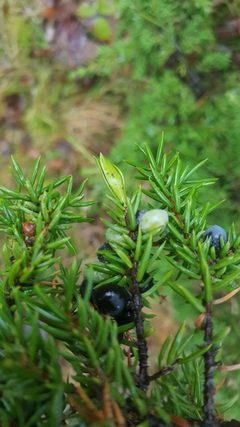
- Juniperus horizontalis - primary Creeping juniper; causes discoloration of young twig tips
Life Cycle
. emerge mid-May; females deposit small clusters on leaf undersides near petioles. Larval occurs 1–2 weeks later with three instars. Larvae bore into petioles and enter stems or buds; galls form by early August. Third-instar larvae vacate galls in late September, enter leaf litter, and construct cocoons to overwinter. occurs the following May.
Behavior
Larvae exhibit boring into plant tissues, creating distinct gall types based on tissue invaded. show daily activity patterns; larvae demonstrate directed movement to litter for cocoon construction. Lower branches of host trees are preferentially attacked.
Ecological Role
Gall-forming herbivore that modifies plant architecture; large galls kill buds, twigs, and branches, while small galls cause deformed limbs and branch scars. Serves as prey for spiders ( caught in webs) and larval . Contributes to nutrient cycling through gall and litter input.
Human Relevance
Economic pest of ornamental and forest trees; damages paper birch causing branch mortality and limb deformation. O. betheli represents an risk with potential for range expansion on host plants.
Similar Taxa
- Other Cecidomyiidae generaDistinguished by specificity, gall (petiole-bud vs. petiole-stem types), and detailed morphological examination of genitalia and antennal structure
More Details
Taxonomic note
The name Oligotrophus has been applied to unrelated organisms in error. Phreatobacter oligotrophus (a bacterium from ultrapure water) and Natrarchaeobius oligotrophus (an archaeon from hypersaline soda lakes) are entirely unrelated sharing only the specific epithet. These are in Bacteria and Archaea respectively, not insects.
Invasion biology
O. betheli represents a documented case of gall midge introduction via ornamental plant trade, with established in Japan on North American Juniperus horizontalis. Authors note potential for further and range expansion to other Juniperus .
Sources and further reading
- BugGuide
- Wikipedia
- GBIF taxonomy match
- iNaturalist taxon
- NCBI Taxonomy
- Catalogue of Life
- LIFE HISTORY, HABITS, AND DAMAGE OF A GALL MIDGE, OLIGOTROPHUS PAPYRIFERAE (DIPTERA: CECIDOMYIIDAE), INJURIOUS TO PAPER BIRCH IN MICHIGAN
- New record of an alien gall midge, Oligotrophus betheli (Diptera: Cecidomyiidae) on a North American Juniperus horizontalis (Cupressaceae) in Japan, with reference to its ecological traits and possibility of further dispersal and host range expansion
- Natrarchaeobius versutus sp. nov. and Natrarchaeobius oligotrophus sp. nov., chitinotrophic natronoarchaea from hypersaline soda lakes, and functional genome analysis of the Natrarchaeobius species.