
Lasioptera
Meigen, 1818
Species Guides
5- Lasioptera ephedrae(Mormon Tea Stem Gall Midge)
- Lasioptera lorrainae
- Lasioptera solani(gall midge)
- Lasioptera solidaginis
- Lasioptera vitis(Grapevine Tomato Gall Fly)
Lasioptera is a of gall midges in the Cecidomyiidae containing at least 140 described . Species in this genus are primarily known for inducing galls on plants, with larvae developing inside plant tissues. Some species have established complex relationships with fungi, including ambrosia fungus feeding. Several species are significant agricultural pests, including the Mediterranean tomato gall midge (L. tomaticola) and a stem-boring pest on tomatoes reported from Greece and Turkey. The genus has a wide geographic distribution spanning Europe, Asia, North America, and other regions, with host associations including Rubus (raspberry/blackberry), tomato, Arundo donax (giant reed), Leea indica, and various other plants.
Pronunciation
How to pronounce Lasioptera: //læsiːˈɒptərə//
These audio files are automatically generated. While they are not always 100% accurate, they are a good starting point.
Identification
are typically tiny, delicate flies with reduced wing venation characteristic of Cecidomyiidae. One observed at blacklight was described as "a lovely black, gray, and white insect." Larvae are legless, maggot-like, and develop within plant galls or stems. Third instar larvae of some species possess distinctive spatula structures on the sternum—typically two-pronged, though L. donacis has a three-pronged spatula with five lateral papillae (typically four in related species). occurs within silken cocoons inside plants; adults egress through escape hatches excavated by third instar larvae.
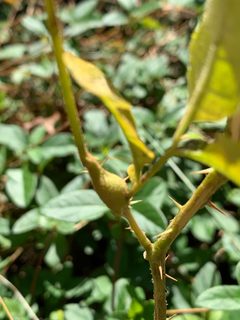
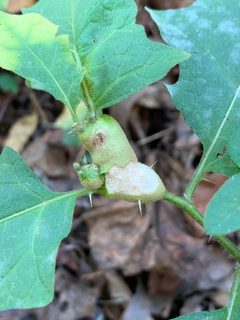
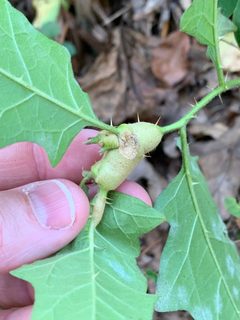
Images
Habitat
Agricultural fields, particularly tomato production areas; natural and semi-natural including oak woodlands, prairies, and areas with plants such as giant reed (Arundo donax), raspberry/blackberry thickets, and various other vegetation. Some are associated with disturbed or managed landscapes where host plants are abundant.
Distribution
Widespread across multiple continents. Documented from Europe (extensive records including Austria, Belgium, Bulgaria, Czech Republic, Estonia, Finland, France, Germany, Hungary, Italy, Latvia, Lithuania, Macedonia, Montenegro, Netherlands, Norway, Poland, Romania, Russia, Serbia, Spain, Sweden, Switzerland, UK, Ukraine), Asia (China, Japan, Korea Republic, India, Turkey), North America, and other regions. Specific pest reported from Greece, Turkey (Mersin province, 2012), and expanding ranges in tomato-growing regions.
Diet
Larval feeding habits vary by : some feed internally on plant tissues (stems, leaves, fruits), inducing gall formation; others feed aggregatively on fungal mycelia (ambrosia fungus) within plant galleries. L. donacis larvae feed specifically on mycelia of ambrosia fungi lining galleries in Arundo donax leaf . L. ephedricola appears to interact with Aureobasidium pullulans yeast in gall formation, though direct fungal consumption is not confirmed. do not feed or have reduced feeding.
Host Associations
- Solanum lycopersicum - pestTomato; larvae feed in stems and sometimes fruits, causing significant economic damage. Mediterranean tomato gall midge (L. tomaticola) specifically associated with this .
- Rubus idaeus - gall inducerRaspberry; induces stem galls, attacked by including Platygaster pelias and Torymus eadyi
- Rubus spp. - gall inducerBlackberry; L. nodula induces stem galls
- Arundo donax - herbivore/fungus-associatedGiant reed; larvae feed on ambrosia fungus in leaf galleries. Candidate biocontrol agent for this plant in North America.
- Ephedra trifurca - gall inducerDesert shrub; gall formation associated with Aureobasidium pullulans yeast
- Leea indica - gall inducerInduces leaf galls; L. sharma described from this in India
- Glycosmis pentaphylla - gall inducerInduces cylindrical green epiphyllous galls on leaves; triggers defense responses altering secondary metabolite profiles
- Momordica charantia - pestBitter gourd; L. bryoniae is a significant pest
Life Cycle
Complete with four stages: , larva, pupa, . L. donacis has three larval instars that develop within mesophyll of plant leaf . Third instar includes feeding and non-feeding prepupal stages. occurs within host plant in silken cocoon. Adult through escape hatch excavated by third instar. Some have attacking larval and pupal stages, including Platygaster spp. and Torymus spp.
Behavior
Larvae of many are internal feeders, developing concealed within plant tissues (stems, leaf , galls), making detection and management difficult. Some species exhibit aggregative larval feeding. Gall induction involves complex biochemical interactions with plants, triggering altered secondary metabolite production (increased tannins, phenols, alkaloids; decreased flavonoids). Some species maintain associations with fungal ; L. donacis larvae feed on ambrosia fungus mycelia rather than plant tissue directly. are attracted to lights at night.
Ecological Role
Gall inducers that manipulate plant physiology and chemistry. Some serve as biocontrol agents for plants (L. donacis for Arundo donax). Important food source for including Platygaster spp., Torymus eadyi, and others. Fungal associations suggest potential roles in fungal and assembly, though trans-pupal fungal passage not confirmed in studied species.
Human Relevance
Several are significant agricultural pests causing economic yield losses, particularly in tomato production. The Mediterranean tomato gall midge (L. tomaticola) and related tomato-feeding species are emerging threats in Mediterranean and Near East growing regions. Management is difficult due to concealed larval feeding in stems. Some species are studied as agents for plants. Research interest in gall induction mechanisms and plant-insect-fungal interactions.
Similar Taxa
- Other Cecidomyiidae generaMany gall midge induce similar plant galls; identification to genus requires examination of , larval spatula structure, and association. Lasioptera distinguished by specific combinations of characters including wing venation, structure, and larval features.
- ContariniaAnother large gall midge with agricultural pest ; differs in specific gall types and ranges, though morphological separation requires expert examination.
Sources and further reading
- BugGuide
- Wikipedia
- iNaturalist taxon
- NCBI Taxonomy
- Catalogue of Life
- Bug Eric: Don't Ignore the Small Bugs!
- Bug Eric: November 2016
- Bug Eric: My Personal National Moth Week, 2017
- Bug Eric: 2016
- Bug Eric: September 2017
- Lasioptera rubi . [Distribution map].
- Domates Üretiminde Yeni Bir Zararlı: Lasioptera sp (Diptera:Cecidomyiidae)
- Alteration in secondary metabolites in Lasioptera sp. (Diptera, Cecidomyiidae) induced galled and ungalled leaves of Glycosmis pentaphylla (Retz.) DC.
- Host Plant Ranges and Distribution Records of Identified and Unidentified Species of the Genus Lasioptera (Diptera : Cecidomyiidae) in Japan
- Influence of the Population Dynamics of a Gall-inducing Cecidomyiid and Its Parasitoids on the Abundance of a Successor, Lasioptera yadokariae (Diptera: Cecidomyiidae)
- Notes on <i>Lasioptera rubi</i> (Schrank) (Diptera: Cecidomyiidae) and its larval parasitoids (Hymenoptera) on raspberries in Russia
- A NEW SPECIES OF PLATYGASTER (HYMENOPTERA: PROCTOTRUPOIDEA, PLATYGASTRIDAE) PARASITIC ON LASIOPTERA NODULA (DIPTERA: CECIDOMYIIDAE) IN BLACKBERRY STEM GALLS
- Lasioptera sharma, a new species of gall midge (Diptera: Cecidomyiidae) feeding on Leea indica (Vitaceae) in India
- Detection of a Diverse Endophyte Assemblage within Fungal Communities Associated with the Arundo Leaf Miner, Lasioptera donacis (Diptera: Cecidomyiidae)
- The New Pest, the Mediterranean Tomato Gall Midge, (Lasioptera Tomaticola Yukawa and Harris, 2019 (Diptera: Cecidomyiidae)) in Tomatoes, Its Further Distribution in Türkiye with Comments On Control Measures
- Laboratory evaluation of botanicals for their repellence and toxicity to bitter gourd gall midge Lasioptera bryoniae Schiner and safety to its parasitoids
- Insights into the Microbes and Nematodes Hosted by Pupae of the Arundo Leaf Miner, Lasioptera donacis (Diptera: Cecidomyiidae)
- Morphology of the Preimaginal Stages ofLasioptera donacisCoutin (Diptera: Cecidomyiidae), a Candidate Biocontrol Agent for Giant Arundo Cane
- Interaction between the black yeast Aureobasidium pullulans and the gall midge Lasioptera ephedricola in gall formation on the desert shrub Ephedra trifurca
- Host range of the European leaf sheath mining midge,Lasioptera donacisCoutin (Diptera: Cecidomyiidae), a biological control of giant reed,Arundo donaxL.