
Rabdophaga salicisbatatus
Potato Gall Midge, Tuber-gall Midge
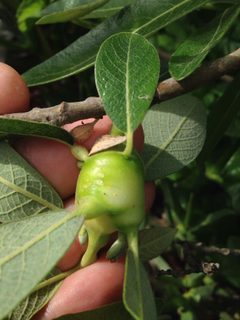
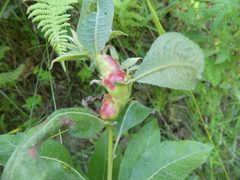
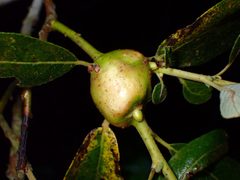
Rabdophaga salicisbatatus is a gall midge in the Cecidomyiidae that induces distinctive stem galls on willows (Salicaceae). The is commonly known as the potato gall midge or tuber-gall midge, referencing the swollen, tuber-like galls it produces. It has been documented across much of North America with over 1,100 iNaturalist observations. The is small and inconspicuous, with the galls being the most visible sign of its presence.
Pronunciation
How to pronounce Rabdophaga salicisbatatus: /ræbˈdɒfəɡə sælɪˌkɪsˈbætətəs/
These audio files are automatically generated. While they are not always 100% accurate, they are a good starting point.
Identification
The potato-like or tuber-like stem galls on willows are diagnostic for this . Galls are irregularly swollen, often clustered at stem nodes, and may reach 1–2 cm in diameter. Similar Rabdophaga species produce different gall morphologies: R. strobiloides causes pinecone-like galls on willows, while R. rosaria forms rosette or leafy galls. R. salicisbatatus galls are distinguished by their tuberous, irregular swelling of the stem itself rather than organized rosette or cone structures. require microscopic examination for definitive identification.
Images
Appearance
are small, delicate with the reduced wing venation characteristic of Cecidomyiidae. Larvae are minute, legless, and maggot-like. The is most readily identified by its galls: irregular, swollen, potato-like or tuber-like growths on willow stems, often clustered at nodes.
Habitat
Associated with willow in wetlands, riparian corridors, floodplains, and moist woodlands. Found in both natural and disturbed where willows occur.
Distribution
North America; documented across much of the United States and Canada where willow are present.
Diet
Larvae feed on plant tissue within the gall, inducing and developing inside the swollen stem growth. Specific feeding habits of unknown.
Host Associations
- Salicaceae - gall inducerInduces stem galls on North American willows (Salix spp.)
Life Cycle
Has been observed to have larval development within stem galls. emerge from galls to mate and oviposit. Specific details of , pupal stages, and voltinism not documented in available sources.
Behavior
Induces gall formation through larval feeding activity. Larvae develop inside the protective gall tissue.
Ecological Role
Acts as a gall inducer on willows, creating structure that may be used by other organisms. Forms part of the of gall-forming insects associated with Salicaceae.
Human Relevance
No significant economic or medical importance documented. Of interest to naturalists and entomologists studying gall-forming insects.
Similar Taxa
- Rabdophaga strobiloidesAlso induces galls on willows, but produces distinct pinecone-like terminal galls rather than irregular tuberous stem swellings.
- Rabdophaga rosariaForms rosette or leafy galls at stem tips, structurally different from the potato-like stem galls of R. salicisbatatus.
More Details
Observation frequency
With over 1,100 iNaturalist observations, this is among the more frequently documented gall midge in North America, likely due to the conspicuous and distinctive nature of its galls.