
Rabdophaga strobiloides
(Osten Sacken, 1862)
Willow Pinecone Gall Midge
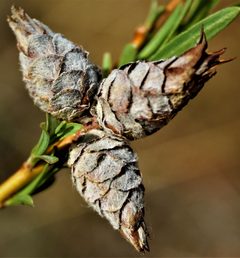
Rabdophaga strobiloides is a gall midge that induces distinctive pinecone-shaped galls on willow plants. The has been studied extensively for its complex - structure, where gall size determines vulnerability to different natural enemies. Research in central Alberta demonstrated that parasitoid attack rates and bird vary non-linearly with gall diameter, creating size-dependent that influence .
Pronunciation
How to pronounce Rabdophaga strobiloides: //ræbˈdɒfəɡə stroʊˌbɪˈlɔɪdiːz//
These audio files are automatically generated. While they are not always 100% accurate, they are a good starting point.
Identification
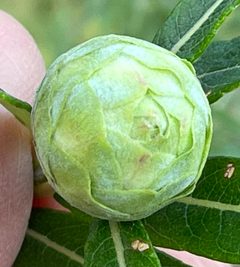
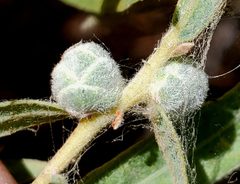
Identified by the distinctive pinecone-shaped gall on willows. Gall shape distinguishes it from other Rabdophaga that induce different gall morphologies (e.g., rosette galls of R. rosaria). Confirmation requires examination of specimens or genetic analysis; the species forms a distinct clade separate from R. rosaria based on COI mitochondrial .
Images
Appearance
are small, delicate flies typical of gall midges. The is best known for the gall it induces: a woody, cone-shaped structure resembling a pinecone, formed on willow stems. Gall size varies considerably and has been documented to range across size classes that determine susceptibility to specific natural enemies.
Habitat
Associated with willow plants in subgenus Vetrix; documented on Salix in sections Hastatae and Sitchenses in Alaska. Specific requirements beyond host presence are not documented.
Distribution
North America, with confirmed records from Alaska (sections Hastatae and Sitchenses of Salix subgenus Vetrix), central Alberta, Canada, and Vermont, USA. The has been reported as occurring throughout North America, though precise range boundaries are not established.
Host Associations
- Salix - gall inductionSubgenus Vetrix; specifically sections Hastatae and Sitchenses in Alaska. plant is the sole food source for larvae developing within galls.
Behavior
Induces galls on willow stems. Gall size is a critical phenotypic trait that structures interactions with natural enemies. Birds attack smallest galls; Torymus cecidomyiae parasitizes medium galls; Gastrancistrus sp. attacks largest galls.
Ecological Role
Serves as for Torymus cecidomyiae (Torymidae) and Gastrancistrus sp. (Pteromalidae). Functions as prey for birds. Gall size creates phenotypic that mediate multi-trophic interactions and influence structure and .
Similar Taxa
- Rabdophaga rosariaInduces rosette-shaped galls on willows rather than pinecone-shaped galls; genetic analysis confirms they are distinct forming separate clades
More Details
Parasitoid community structure
Mortality rates range from 51% to 78%, dominated by and bird . The non-linear relationship between gall size and attack rates by different enemies creates complex selection pressures on gall .
Genetic differentiation
Alaskan form a distinct clade (Clade 2) separate from R. rosaria, with genetic differences among R. rosaria subclades ranging from 1.06% to 3.46%.
Sources and further reading
- BugGuide
- Wikipedia
- GBIF taxonomy match
- iNaturalist taxon
- Catalogue of Life
- Gall size determines the structure of the Rabdophaga strobiloides host–parasitoid community
- Genetic variation in intraspecific populations of Rabdophaga rosaria (Diptera: Cecidomyiidae) indicating possible diversification scenarios into sibling species along with host range expansion on willows (Salicaceae: Salix)