
Macrodiplosis qoruca
Oak Vein Pocket Gall Midge
Macrodiplosis qoruca is a gall midge in the Cecidomyiidae, known for inducing pocket-like galls on oak leaf . The is widely distributed in North America and has been documented through over 1,300 observations. are small, delicate flies typical of the family. The specific epithet 'qoruca' derives from the Cherokee word for oak.
Pronunciation
How to pronounce Macrodiplosis qoruca: /ˌmækrəʊdɪˈpləʊsɪs kɔːˈruːkə/
These audio files are automatically generated. While they are not always 100% accurate, they are a good starting point.
Identification
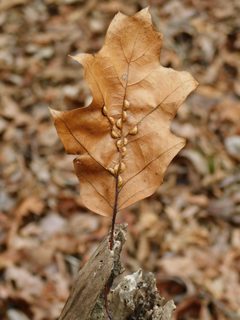
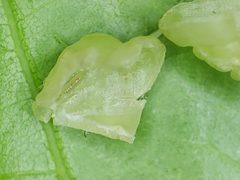
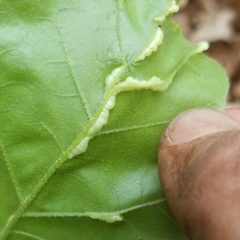
Distinguished from other Macrodiplosis by the characteristic pocket-shaped galls formed along oak leaf . The galls appear as small, pouch-like swellings on the upper or lower leaf surface, often clustered along the midrib or secondary veins. are minute (2-3 mm), with long, slender legs and reduced wing venation typical of Cecidomyiidae. Larvae are small, legless, and maggot-like, found within the gall tissue.
Images
Habitat
Associated with oak-dominated forests, woodlands, and urban areas where oak trees are present. Found wherever suitable oak occur, including Quercus alba, Q. rubra, and related white and red oak group species.
Distribution
Eastern and central North America, ranging from southern Canada through the eastern United States. Documented throughout the oak-hickory forest region and adjacent areas.
Seasonality
occurs in spring, coinciding with oak leaf expansion. Gall formation is visible from late spring through summer. Larvae develop within galls through summer, with occurring in soil or leaf litter. stage appears to be pupal.
Diet
Larvae feed on gall tissue induced on oak leaf . Specific nutritional relationship involves stimulation of plant tissue growth and consumption of the resulting gall parenchyma.
Host Associations
- Quercus alba - white oak
- Quercus rubra - northern red oak
- Quercus - various oak in white and red oak groups
Life Cycle
are deposited on developing oak leaves. Larvae induce pocket galls and develop within, passing through three instars. Mature larvae exit galls and drop to the ground to pupate in soil or leaf litter. emerge the following spring to synchronize with leaf . (one per year).
Behavior
Larval feeding induces localized plant tissue proliferation, creating enclosed gall chambers. are weak fliers, typically remaining near trees. Mating and oviposition occur during brief adult lifespan in spring.
Ecological Role
As a gall inducer, creates microhabitats that may be used by and . Contributes to leaf damage on oaks, though generally not causing significant tree mortality. Represents a component of oak-associated diversity.
Human Relevance
Minor aesthetic concern when galls are numerous on ornamental oaks. No significant economic impact on timber or nut production. Occasionally noticed by gardeners and naturalists due to distinctive gall . Name etymology reflects Cherokee linguistic heritage of the ' description region.
Similar Taxa
- Macrodiplosis erubescensAlso forms galls on oaks; distinguished by gall and specificity differences
- Macrodiplosis niveipilaSimilar oak-associated gall midge; requires examination of gall structure and location for separation
- Other Cecidomyiidae on oaksNumerous oak gall midges exist; pocket galls are diagnostic for M. qoruca among eastern North American
More Details
Etymology
The specific epithet 'qoruca' is derived from the Cherokee word for oak, reflecting the ' intimate association with Quercus and the geographic region where the species was described.
Gall Morphology
pocket galls are among the most structurally distinctive oak galls, appearing as elongated, pouch-like swellings that often open to a slit or pore on one surface. This distinguishes them from the more common spherical or disc-shaped oak galls induced by cynipid .